
Updated January 2026
Written from Kapchorwa, Mount Elgon Highlands
Are you struggling to find clear and practical information about Mount Elgon National Park? On how to climb this magnificent mountain, what route to choose, how much it costs, and whether it is really the right trek for you?
Let us help.
Mount Elgon is one of Uganda’s hidden natural treasures: a vast extinct volcano with gentle slopes, a huge caldera, quiet trails and some of the most peaceful trekking landscapes in East Africa. It is not as famous as Kilimanjaro or the Rwenzoris. That is exactly part of the appeal.
Since 2017, Eliza and I have been based in Kapchorwa, Mount Elgon’s central highland town. We both climbed the mountain ourselves, and over the years we have helped many guests prepare for their own trek.
This guide is based on lived experience, conversations with local guides and current information from key stakeholders. It aims to help you plan well and avoid unnecessary confusion.
👉 Not sure how to structure your days? See our 3, 5 and 7-day Mount Elgon itinerary.
Mount Elgon at a glance
Location: Eastern Uganda / Western Kenya
Highest peak: Wagagai - 4,321m
Mountain type: extinct volcano
Best-known activity: multi-day trekking to Wagagai Peak
Typical trek duration: 3-5 days depending on route
Best months for clearer weather: December-March and June-August
Nearest base on Ugandan side: Kapchorwa / Sipi / Budadiri, depending on route
Table of contents
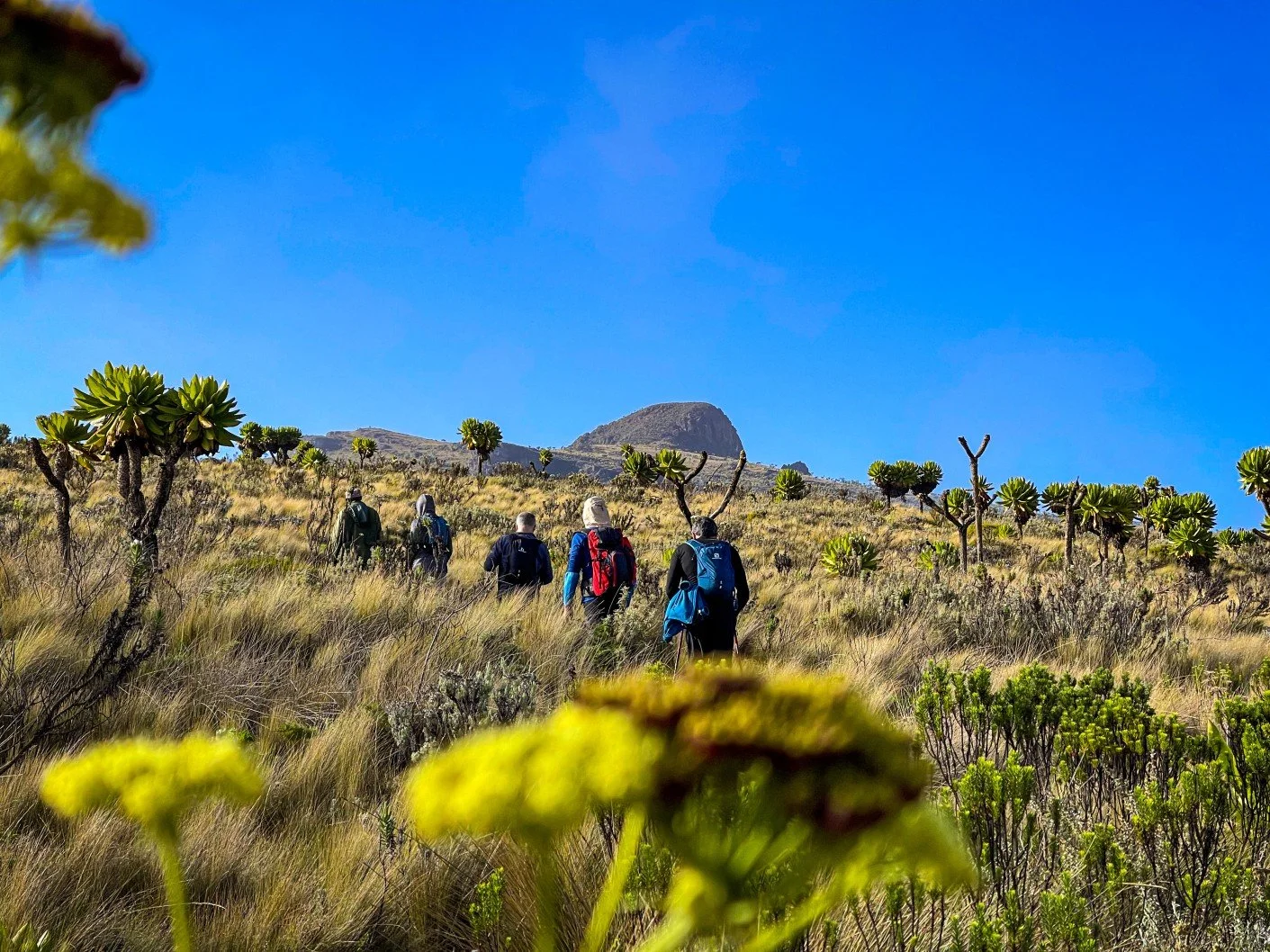
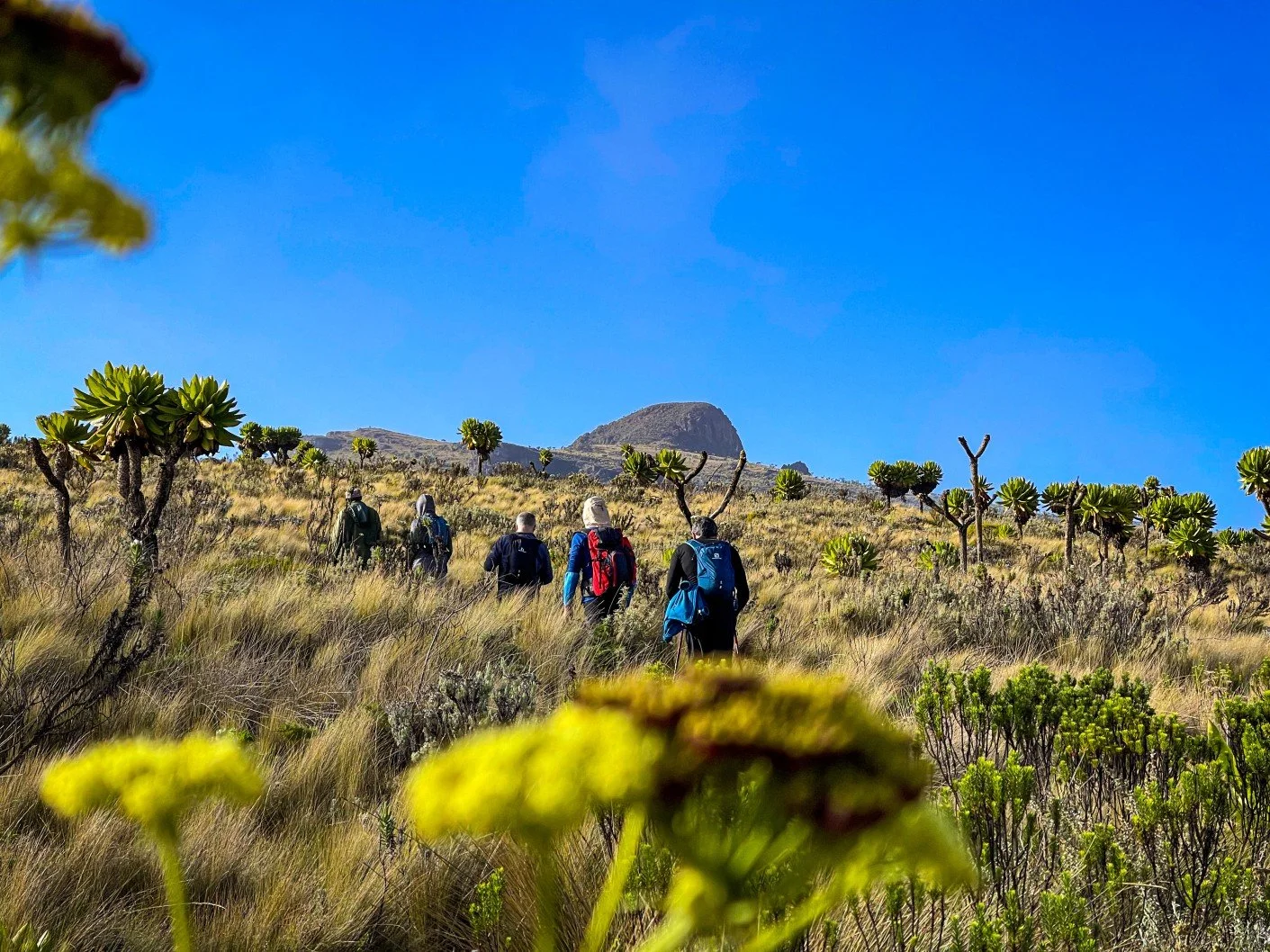
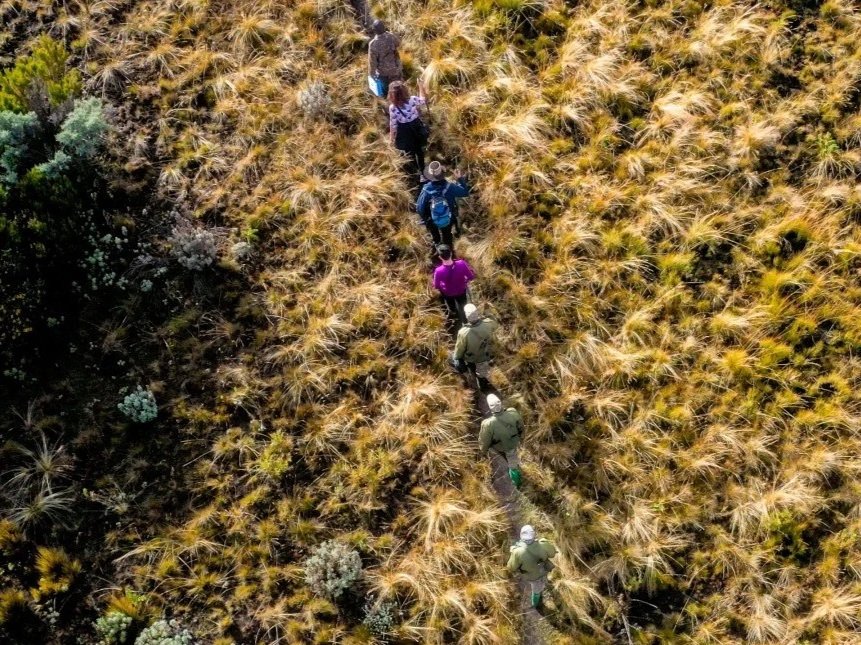
Hikers on their way to Mount Elgon’s Wagagai peak. Photo credit: Juma Chebet
Where is Mount Elgon National Park LOcated?
Mount Elgon National Park lies on the border between Uganda and Kenya, about 100 kilometers northeast of Lake Victoria. On the Ugandan side, the main access areas are around Kapchorwa, Sipi, Kapkwai, Budadiri and Bududa, depending on your chosen route.
Sipi is particularly famous for its waterfalls and hiking trails.
Kapchorwa is the best-known highland town near the northern slopes and is often used as a base before or after a trek. It is also known as Uganda’s Land of Running Champions.
The wider Elgon region is remarkably green, fertile and spacious. Even before entering the park, the scenery already gives you that feeling of clean air, quiet and distance from everyday noise.
👉 Read our Kapchorwa Travel Guide
👉 Read the Complete Guide to Sipi Falls

Location of Mount Elgon on the border between Uganda and Kenya
What is Mount Elgon known for?
Mount Elgon is known for its high-altitude hiking trails, ancient volcanic landscapes and rich cultural heritage. Unlike more crowded destinations, it offers quiet trails, authentic community encounters and a slower, more immersive travel experience.
Why climb Mount Elgon?
Mount Elgon is a mountain of space and stunning nature.
Instead of technical climbing, you come for:
gradual ascent rather than punishing steepness
wide-open landscapes and changing vegetation zones
a huge caldera near the summit
far fewer crowds than on more famous African mountains
a deep sense of quiet once you leave the trailheads behind
Many travelers who visit Mount Elgon also explore the surrounding landscapes such as waterfalls, caves and highland villages.
It is one of the easiest 4,000+ meter mountains in Africa in technical terms, but still a proper adventure that rewards preparation.
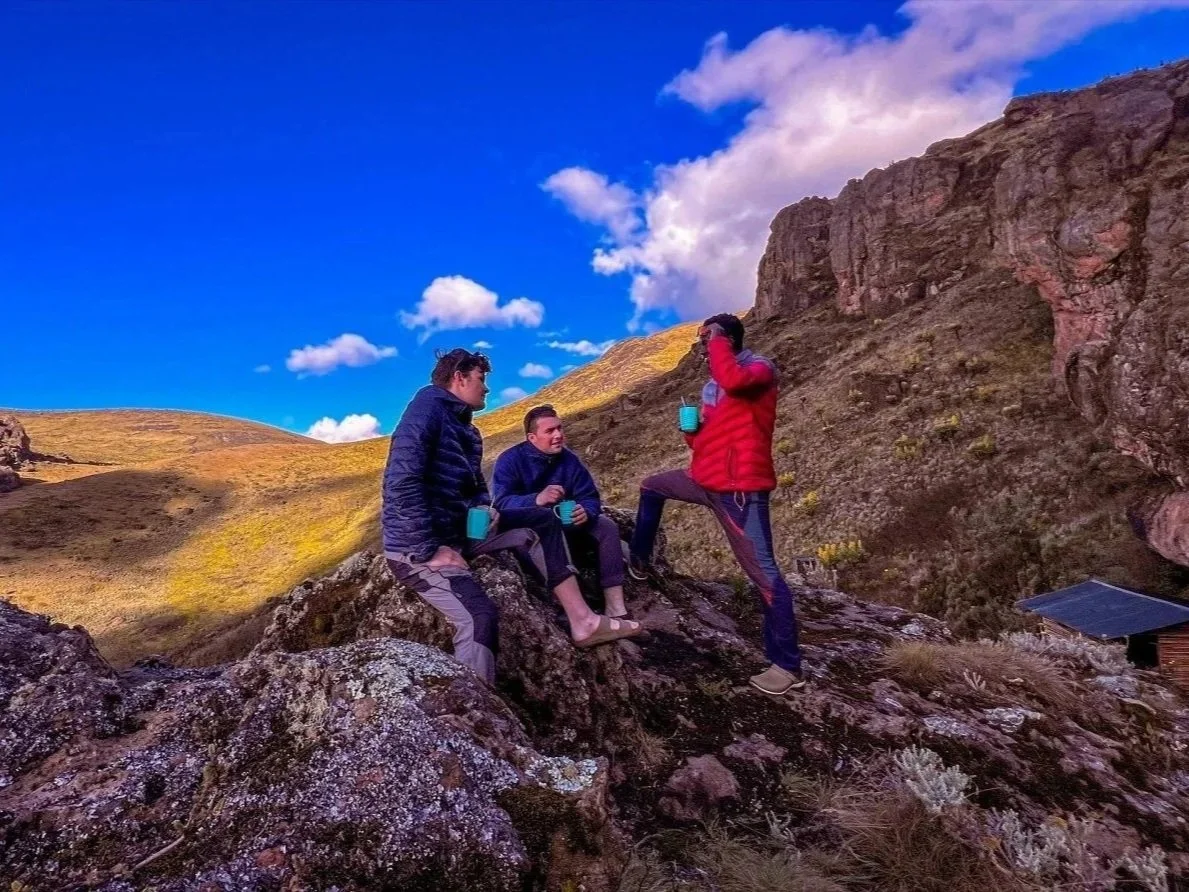
Hikers at the Mwongogo cave restpoint. Photo credit: Job Soyekwo / Mulima Adventures
Routes Compared: SASA, SIPI, PISWA & BUSHIYI
Not sure which route fits you best? This quick overview helps you compare Mount Elgon’s four main trekking routes at a glance.
| Route | Typical duration | Difficulty | Best for | Main character |
|---|---|---|---|---|
| Sasa Trail | 3–4 days | Challenging | Fit hikers short on time | Shortest and steepest route to the peaks Fastest summit option |
| Sipi Trail | 4–5 days | Moderate | Scenic trekkers | Good variety with waterfalls, caves and beautiful landscape transitions Most balanced |
| Piswa Trail | 4–6 days | Moderate | Hikers who prefer a gentler ascent | Quiet, wide and gradual route with strong acclimatisation potential Gentlest climb |
| Bushiyi Trail | 3–4 days | Moderate | Strong hikers seeking a quieter trail | Less visited and more direct, with rewarding views on the southern side Quieter access |
Our honest recommendation
If you have the time, we usually recommend the Piswa-Sipi or Bushiyi-Sipi combination. These routes give you more landscape variety, more quiet and a fuller feel of Mount Elgon than the shortest summit push.
The four routes in a little more detail
Sasa Trail
The fastest and steepest route to Wagagai. Good for strong hikers short on time. Less gentle, more direct.
Sipi Trail
Scenic and popular for good reason. Combines mountain trekking with some of the wider Sipi landscape. A strong choice for most visitors.
Piswa Trail
The longest and often gentlest route. Great for acclimatisation, wide views and a quieter mountain feel.
Bushiyi Trail
A less mainstream route from the southern side. Good access to the summit and often a more peaceful trekking experience.

Map of Mount Elgon with its four trailheads and Wagagai peak
How many days does a Mount Elgon trek take?
A return trek to Wagagai usually takes between 3 and 6 days, depending on route and pace.
2 days: possible only in exceptional, very fast cases on the shortest routes, but not ideal
3-4 days: works for Sasa or Bushiyi if you are fit
4-5 days: the sweet spot for most hikers
5-6 days: best for those who want more comfort, adaptation and enjoyment
Our advice is simple: do not rush Elgon. It is more rewarding when you give it time.
Is it safe to hike Mount Elgon National Park?
Yes, trekking Mount Elgon is generally safe.
On the Ugandan side, summit treks are done with Uganda Wildlife Authority rangers, and many hikers also add an experienced local guide through a tour operator.
Why add a local guide?
Because park rangers provide protection and route structure, but local operators often add:
stronger communication
more planning support
smoother logistics
Ask us via WhatsApp for a trusted local tour operator recommendation
First aid and emergency reality
Let us be straightforward: the mountain is safe, but it is still remote. Rangers usually have basic first aid awareness, but medical resources inside the park are limited.
So:
carry a small first aid kit yourself
do not underestimate weather and cold
book through an established operator if you want more support
In case of a serious problem, descent is the main response.
How fit do you need to be?
You do not need to be a professional athlete.
Mount Elgon’s slopes are gradual compared to many mountains of this height. But you do need:
decent walking stamina
comfort with several long hiking days
willingness to keep going in cold or wet weather
Children and older hikers can do Elgon too, with the right pace and preparation.
A realistic standard
If you can comfortably do a full day hike with elevation gain, and train a bit beforehand, you are likely well placed for Elgon.
Altitude sickness
Altitude sickness is possible on any mountain above 4,000m, even on a gentler one like Elgon.
To reduce risk:
climb gradually
drink enough
take breaks
do not ignore headaches or nausea
If symptoms persist, descending is the right call.

Jackson’s Pool at Mount Elgon, not far from Wagagai peak. Photo credit: Juma Chebet
Weather and best season
Mount Elgon is green because it gets good rainfall.
Better months for clearer weather
December to March
June to August
Wetter periods
April to May
September to November
Even in the “good” months, weather can change quickly. Nights can drop to around 0–5°C higher up, and hail is possible near the summit area.
Make sure to bring warm layers.
Sleeping facilities inside the park
Sleeping conditions inside Mount Elgon National Park are basic.
Depending on route and operator, you may sleep:
in simple camps
in wooden shelters
in semi-open cave-style shelters
in your own tent under basic cover
Do not expect luxury. Expect mountain simplicity.
If infrastructure has improved on certain routes, treat that as a bonus rather than the baseline.
What gear do you need?
Mount Elgon does not require technical climbing equipment, but proper preparation makes a big difference. Here is a practical packing list for most trekkers.
| Item | Why bring it | Priority |
|---|---|---|
| Strong hiking shoes | Essential for long walking days, muddy stretches and rocky sections | Essential |
| Warm layers | Nights on Mount Elgon can be very cold, especially higher up | Essential |
| Rain jacket | Weather changes quickly and rain is always possible | Essential |
| Sleeping bag | Sleeping facilities are basic and temperatures can drop sharply at night | Essential |
| Backpack | For daily essentials during the hike | Essential |
| Water bottles or hydration pack | Hydration is important at altitude and during long hiking days | Essential |
| Headlamp or torch | Useful in camp and for early starts or night-time movement | Essential |
| Hat and sunscreen | The sun can be strong even when the air feels cool | Essential |
| Personal medication | Bring what you specifically need, including altitude or pain relief if advised | Essential |
| Small first aid kit | Useful because mountain medical support is basic | Recommended |
| Plastic bags / dry bags | Keeps clothing and electronics dry in wet weather | Recommended |
| Trekking poles | Helpful for longer descents and muddy sections | Recommended |
| Blister care / baby powder | Can make a big difference on multi-day hikes | Recommended |
| Power bank | Useful if you carry a phone or GPS device | Optional |
| GPS device | Not essential if you move with guides, but some hikers like the backup | Optional |

Valley views from the Bushiyi Trail. Photo credit: Juma Chebet.
What does a Mount Elgon trek cost?
This depends on:
your route
your nationality
whether you book directly or through an operator
whether you take a porter and cook
General reality check
For international visitors, a Mount Elgon trek often lands around USD 80–100 per day, depending on support level.
For Ugandan citizens and East African residents, costs are much lower.
What makes up the price?
Usually:
UWA entrance fees
camping fees
ranger costs
porter
cook
food
guide / operator commission
Our practical advice
Do not try to save money by skipping a porter or cook if you are not used to carrying multi-day trekking weight. It affects your enjoyment a lot.
And from a local perspective, porters and cooks are also part of how trekking supports surrounding communities.
How do you pay?
Payment options vary depending on who organises your trek.
Possible methods include:
direct payment to UWA
payment through a local operator
mobile money
bank transfer
card payment in some cases
The easiest route for most visitors is to book through a reliable operator who bundles permits and logistics.

Eliza (Home of Friends) @ Wagagai peak in November 2023. Photo credit: Juma Chebet
Can you bike or run inside Mount Elgon National Park?
Mountain biking
Yes, mountain biking inside the park is possible in some cases, but it is specialised and logistically more complex than hiking.
Trail running
Trail running inside the park is generally difficult to organise because movement requires ranger accompaniment, and runners often move faster than rangers can comfortably follow.
For strong runners, it usually makes more sense to run outside the park on the trails around Kapchorwa and Kween.
Kapchorwa has become internationally known for its high-altitude running culture.
How to get to Mount Elgon
There is no nearby airport directly serving the park.
Closest major gateways
Entebbe International Airport for most international visitors
Eldoret can work if combining with Kenya
By road
From Kampala or Entebbe, expect around 7–9 hours depending on traffic and destination side of the mountain.
Public transport
Kapchorwa is reachable by long-distance taxi or bus, including services like Time Keeper.
Self-drive
Increasingly common, and viable thanks to improved tarmac on the main roads. The final stretches to some trailheads are still rough or slippery in wet conditions.
For detailed road advice, it’s best to check close to your travel date.
Interesting facts about Mount Elgon
It is one of East Africa’s oldest volcanoes
Mount Elgon is estimated to be around 24 million years old.
It has a huge caldera
The summit caldera is about 8 km wide.
It may once have been taller than Kilimanjaro
This is commonly repeated and may well be true, though impossible to prove precisely now.
Highest peak
Wagagai – 4,321m
It is a UNESCO transboundary biosphere reserve
The mountain is recognised for its ecological and cultural importance across both Uganda and Kenya.
Birdlife
Mount Elgon is home to over 300 bird species, making it interesting not only for hikers but also for dedicated birders.
Who can organise a Mount Elgon trek?
We recommend working with an experienced local operator.
A good operator helps with:
route choice
permits
transport
food and camp logistics
communication before the trek
The best choice depends on your preferred route, budget and style.
If you want, we can help connect you to a reliable fit.

A deserved break close to Wagagai peak. Photo credit: Juma Chebet
Where to stay before and after your trek
This depends mainly on your route.
Sasa / Budadiri side: stay closer to the western trailhead
Sipi / Kapkwai side: Sipi or Kapchorwa works
Piswa side: Kapchorwa is very practical
Bushiyi side: stay nearer Bududa before the trek if needed
Staying in Bududa: Riverine Resort
If you are starting or finishing your Mount Elgon trek via the Bushiyi Trail, Riverine Resort in Bududa is a practical, convenient option.
We visited the resort ourselves and found the rooms clean, spacious and well maintained, with en-suite bathrooms and views towards the green Bududa highlands. Rooms were offered at around UGX 150,000 per night, although rates may be negotiable depending on your stay.
The resort is also expanding, with a substantial new accommodation building under construction during our July 2026 visit.
Best for: hikers using the Bushiyi Trail who prefer to stay close to the southern side of Mount Elgon before or after their trek.
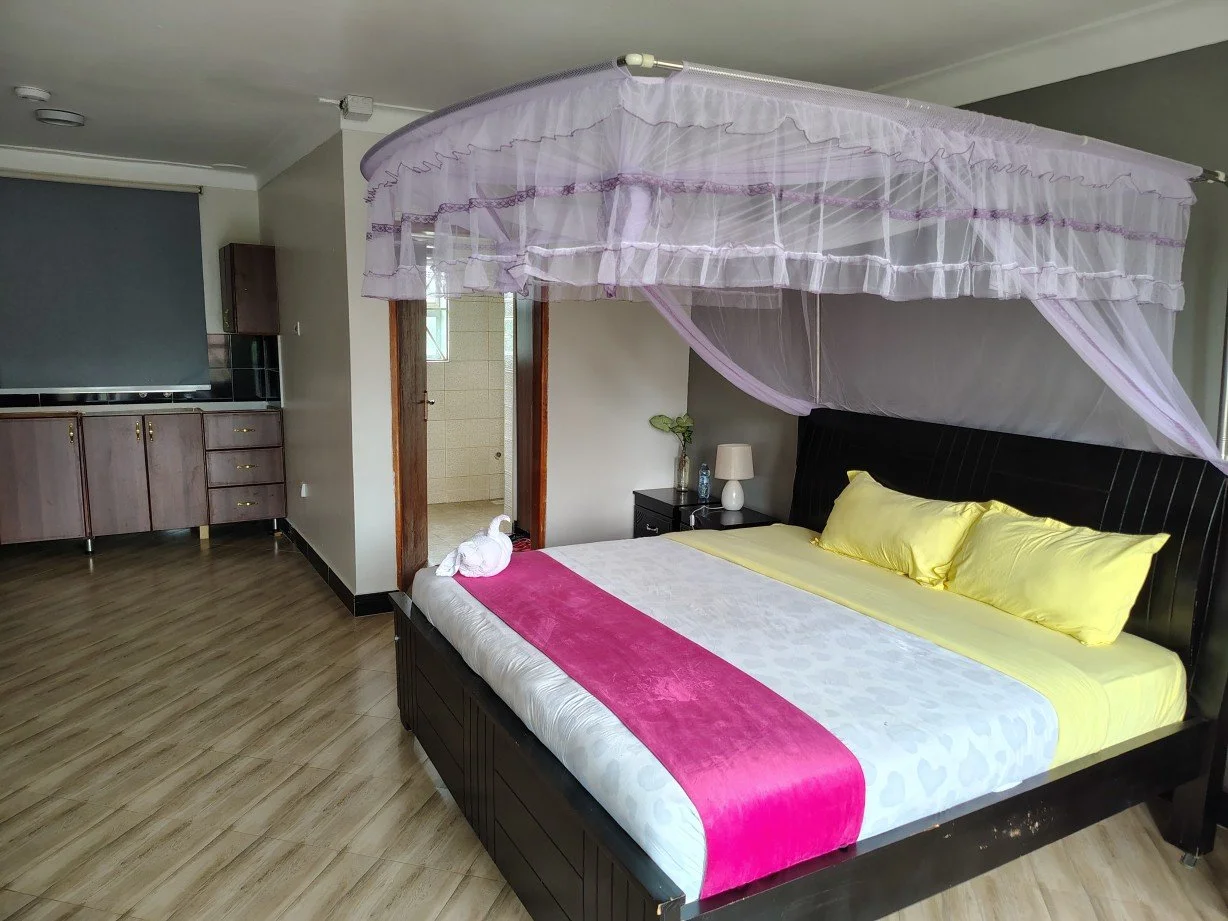
Double room @ Riverine Resort in Bududa
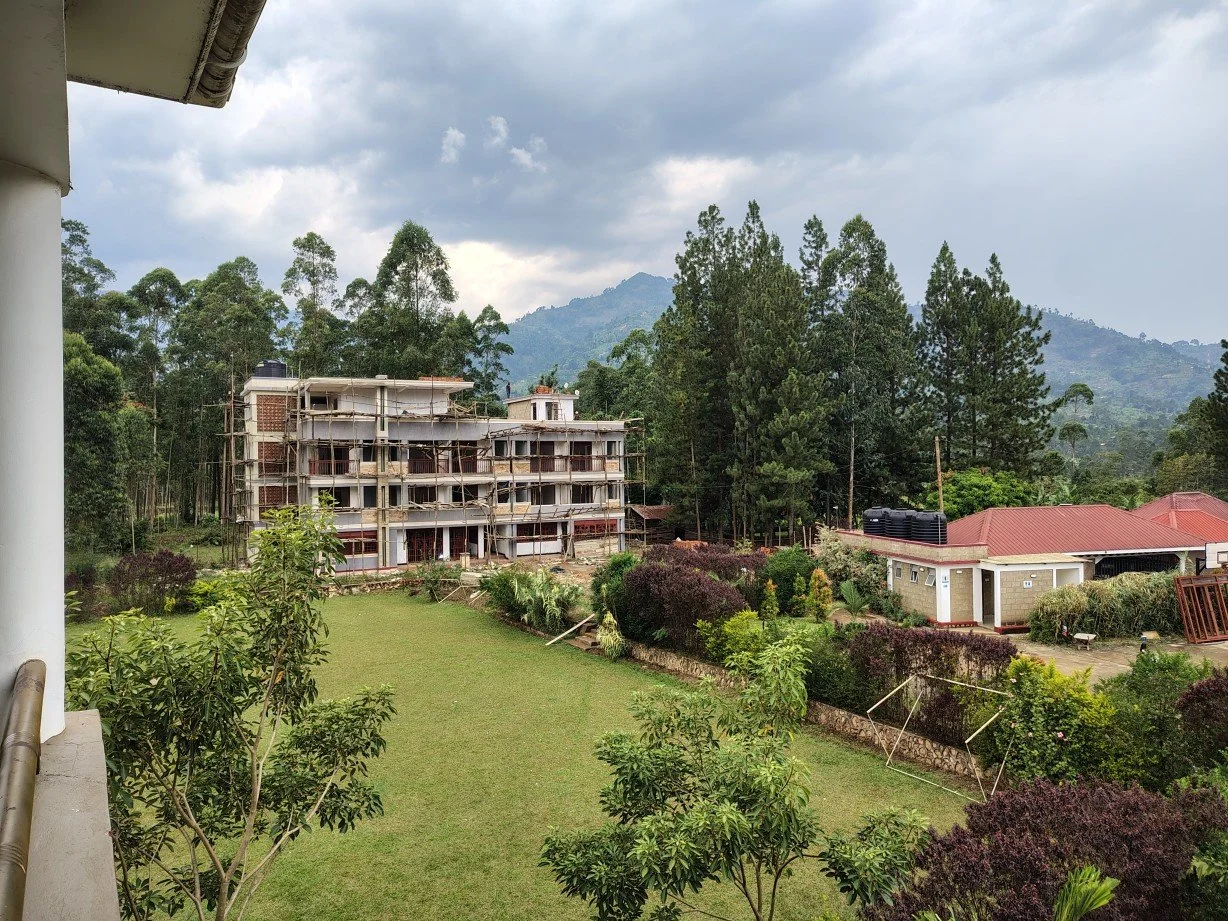
New rooms construction @ Riverine Resort in Bududa
If you want a calm highland base before or after trekking, Kapchorwa works especially well for:
recovery
good food
massage
cultural add-ons
extra hiking or running days
Many travelers also use this time to explore cultural experiences around Mount Elgon.
At Home of Friends, many guests use their Elgon climb as the centerpiece of a wider Mount Elgon stay.
Before or after the trek, they often enjoy:
a relaxation massage
campfire storytelling
fresh juices and proper recovery meals
quieter village walks
or additional hiking adventures such as the Mosopisiek Trail.
👉 Explore Accommodation in Kapchorwa
👉 See our Relaxation Massage page
👉 Browse guided experiences around Mount Elgon
Related Mount Elgon guides
To plan your wider stay, these may help:
Frequently asked questions
-
Yes. Mount Elgon is an extinct volcano estimated to be around 24 million years old. It has one of the largest volcanic bases in the world and a massive 8-kilometre-wide caldera near the summit.
-
Most hikers take 3 to 6 days to reach Wagagai Peak and return. The exact duration depends on the route, your pace and how much time you allow for acclimatisation.
-
The highest peak of Mount Elgon is Wagagai, at 4,321 metres above sea level. It lies on the Ugandan side of the mountain.
-
Mount Elgon is considered one of the easier 4,000-metre mountains in Africa because its slopes are gradual and the trails are not technical. However, it still requires good hiking fitness and preparation for several long walking days.
-
Yes, trekking Mount Elgon is generally safe. Hikers inside the national park must move with Uganda Wildlife Authority rangers.
-
You don’t need to be a professional athlete, but you should be comfortable with multiple days of hiking and walking 6-9 hours per day on uneven terrain. Some preparation hikes before your trip are strongly recommended.
-
Yes. Mount Elgon can be suitable for families with active children, especially when the trek is spread over more days and taken at a relaxed pace. Children from around 7-10 years and older have successfully reached the summit.
-
Sleeping facilities are basic. Most trekkers sleep in tents at campsites, sometimes under simple wooden shelters or semi-open caves. Comfort is limited, but the mountain environment and campfire evenings make the experience memorable.
-
Interaction with local communities mainly happens near the trailheads and through the porters, cooks and guides who join your trekking team. For deeper cultural experiences, consider community hikes around Kapchorwa and Kween, such as the Mosopisiek Trail.
-
Mountain biking is possible in some parts of the park, but it requires a special permit and a ranger escort. Most visitors prefer hiking, as the trails are better suited for trekking.
-
Trail running inside the park is complicated because visitors must move with a ranger, and rangers generally cannot keep pace with runners. However, there are excellent trail running routes outside the park, especially around Kapchorwa.
-
Mount Elgon treks can be organised by the Uganda Wildlife Authority (UWA) or by experienced local tour operators. Many travelers prefer booking through an operator because they handle permits, guides, porters, food and logistics.
-
Mount Elgon can be climbed year-round, but the best chances for clearer weather are during the drier seasons from December to March and June to August.
During these months, mornings are often sunny and the trails are less muddy. However, Mount Elgon’s weather can change quickly at any time of year, so hikers should always prepare for rain and cold nights at higher altitudes.
Final thought
Mount Elgon is not Africa’s most famous mountain.
That is exactly why it remains special.
If you want space, calm, landscape variety and a trekking experience that still feels real rather than overpackaged, it is one of the best mountains in East Africa.
Many travelers discover Mount Elgon while exploring Uganda’s lesser-known adventure destinations.
And if you want honest advice on whether Elgon fits your plans, route choice or fitness level, feel free to ask.
This blog is written by Daan Oxener, a Dutch social entrepreneur who is based in Kapchorwa since 2016. Daan manages Home of Friends Guesthouse, together with his wife Eliza. He is passionate about documenting Mount Elgon’s beautiful nature and remarkable culture. Daan is also engaged in Community & youth empowerment through adventure tourism.