
Updated: August 2026
Before sunrise, the Champion's Trail slowly comes to life.
Around 5.30 am, the first marathon runners pass by our Guesthouse. Some head out for training loops of 30 to 35 kilometers, combining the rolling roads around Kapchorwa Town with the quiet trails of neighboring Kween District.
The steady rhythm of footsteps is joined by birds waking up and children making their way to school.
It feels like an ordinary morning in rural Uganda at first.
But then you look a bit further.
On the next hill stands the home of Olympic champion Joshua Cheptegei.
If you're lucky, you cross paths with the maestro himself or world champion Victor Kiplangat, who built his home along the same Champion's Trail back in 2024.
Interesting fact 💡
The red dirt trails and tarmac roads around Kapchorwa are open to everyone. Every morning, schoolchildren, Olympic champions and boda boda riders all share the same trails and roads.
When I first arrived in Kapchorwa back in 2014, it were the ordinary people who made the strongest impression on me.
Strangers greeted me along the trail. Children laughed while jumping over rocks. And others carried bundles of firewood ('kwenek' in the local Kupsapiiny language) to the nearest trading center.
It was only later when I realised that all these small moments connected to a culture of movement and running.
The wonderful thing is that you don’t have to be an extra-ordinary runner to experience Uganda's Land of Champions.
Some visitors do come to add red blood cells. But others hike through the hills, enjoy a relaxed morning run or come to explore and understand how this relatively small highland region has produced so many world-class athletes.
Whatever brings you here, Kapchorwa offers a unique opportunity to experience the intriguing people, amazing landscapes and daily routines behind the medals.
In this guide, you'll discover:
Why Kapchorwa has become Uganda's running capital.
Where to run, walk and train alongside local athletes.
The unique ecosystem fueling our champions.
The people, food and daily routines behind the medals.
Practical tips for running at altitude.
How to plan your own active holiday around Mount Elgon.
You can experience Kapchorwa's running culture in a morning. But the longer you stay, the more interesting it becomes.
A short visit might mean running the Champion's Trail, watching a training session and visiting one of the region's running tracks.
If you stay a few days more you can explore the surrounding highlands, hike to waterfalls, visit coffee farms and start to connect with the people along the roads.
Stay for a week or two and something changes.
You stop following a fixed program
You start developing your own rhythm.
This is when Kapchorwa becomes more than a running destination.
It becomes a place where you slowly immerse into a different pace of living.
Kapchorwa Running at a Glance
🏃 Best for: Recreational runners, trail runners, running groups, outdoor travellers and culturally curious non-runners
⛰ Altitude: Approximately 1,900-2,700 meters above sea level
📅 Ideal length of stay: 3 days to 3 weeks
🥾 Running surfaces: Tarmac roads, red-dirt village tracks and forest trails
💪 Experience level: Beginner to elite
🤝 Best combined with: Hiking, culture, traditional food, relaxation, recovery and Mount Elgon adventures
QUICK NAVIGATIOn
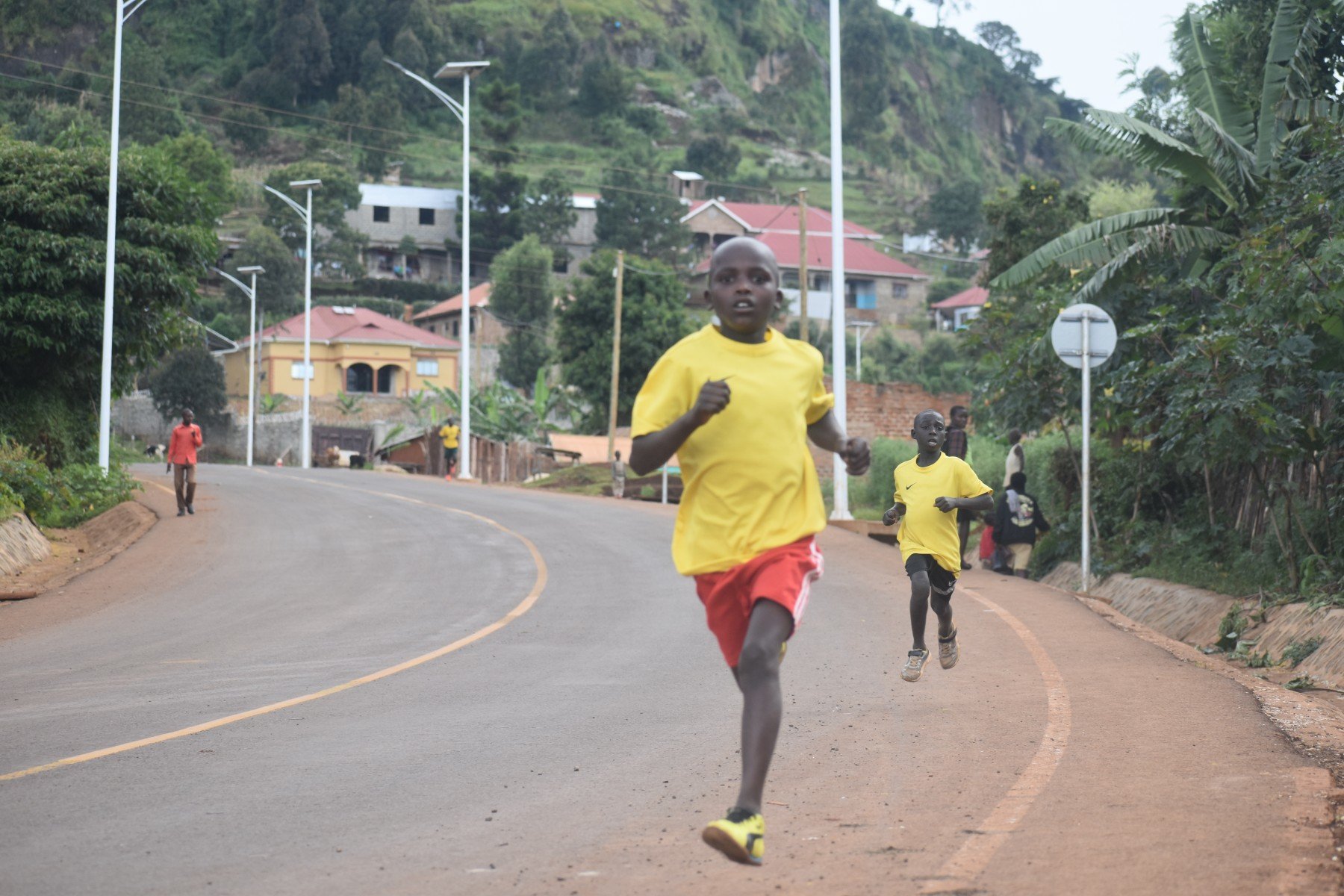
Junior runners on the newly tarmacked Kapchorwa-Teryet road near our Guesthouse
Why Is Kapchorwa Uganda's Running Capital?
Over the past two decades, Kapchorwa has earned a reputation as Uganda's running capital.
Although many champions were born in the neighboring districts of Kween and Bukwo, Kapchorwa Town is where the region's running Community comes together. Athletes train in and around this little town, coaches meet and create training schedules together and travelers naturally find themselves at the center of the action.
One of the first things that surprises most visitors is how accessible the running culture is.
On an ordinary morning run, it's not unusual to encounter four or five elite athletes.
And if you visit the Tuesday morning speed session at the town’s central sports field Boma Grounds, you'll find some of Uganda's leading training groups sharing the same track.
Local insight 💡
Joshua Cheptegei, Jacob Kiplimo, Victor Kiplangat and Peruth Chemutai all still regularly train on public roads around Kapchorwa. There are no VIP running routes. If you're out for an early run or walk, there's a significant chance you'll come across one of them.
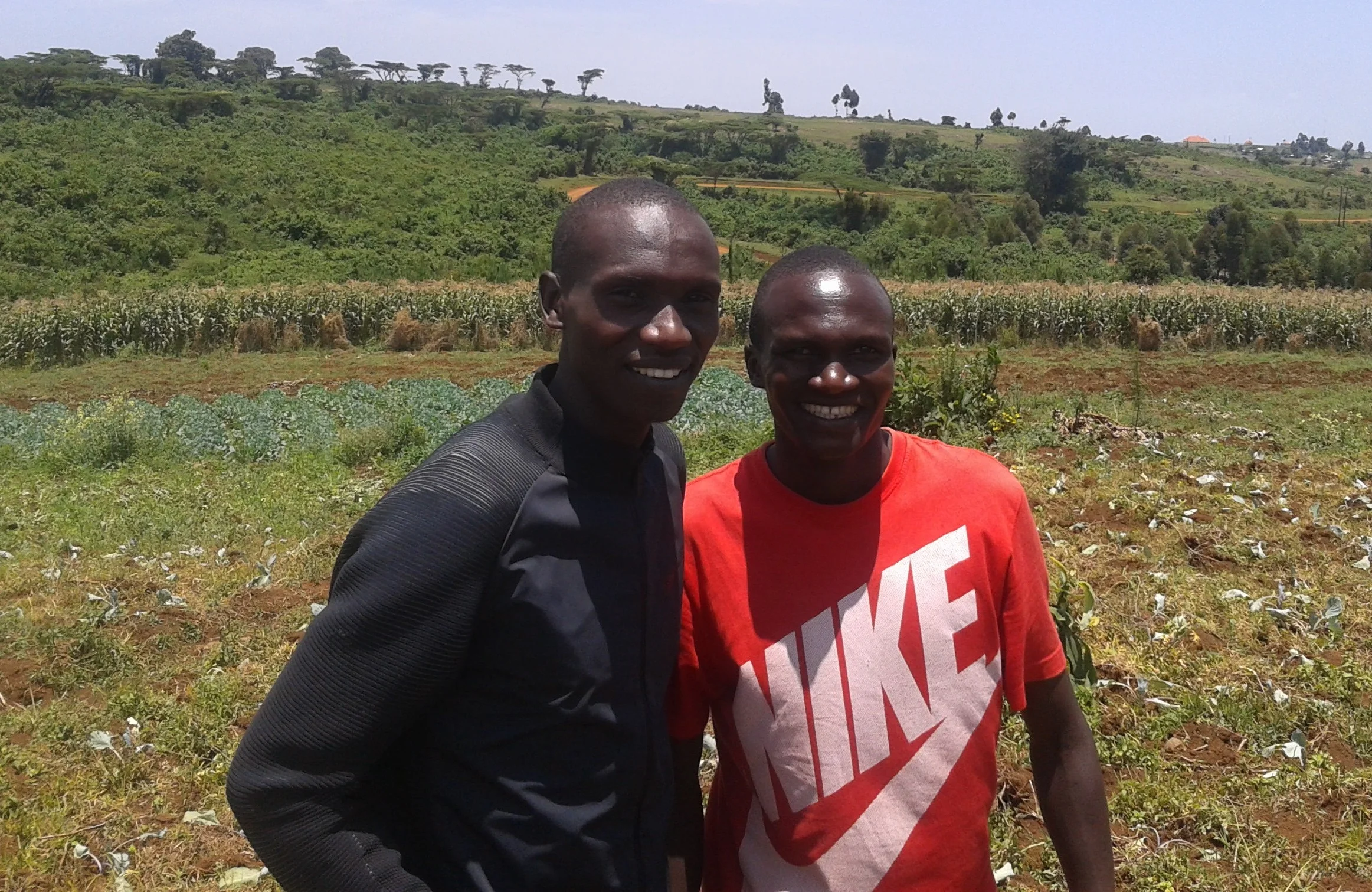
Joshua Cheptegei and Stephen Kiprotich during a spontaneous meet and greet at Stephen's farm in 2016
The splendid landscape and its running trails are part of the region's identity.
The 5 km Champion's Trail is a favorite for an easy evening run.
The 21 km Kamuges Loop passes the homes of Olympic champion Stephen Kiprotich and his Global Sports marathon colleague Felix Chemonges.
Marathon runners often head towards the higher belts of Kapchorwa and neighboring Kween on the challenging Mengia Loop, where long climbs, quiet roads and spectacular views which give a special touch to every run.
All champions come from remarkably small villages in the higher belts of Kapchorwa and Kween District (2200m + ASL).
Kwoti produced Stephen Kiprotich and Joshua Cheptegei. Likil and Mengia are home to athletes such as Victor Kiplangat, Jacob Kiplimo and Oscar Chelimo.
For a relatively small highland region, the concentration of international athletes is extraordinary.
But the most remarkable thing is probably how normal their presence feels.
Top athletes train on the same roads.
Attend the same Community churches.
And sometimes they simply walk into our Guesthouse restaurant.
This is one of the things that makes Kapchorwa feel so different from other international running destinations.
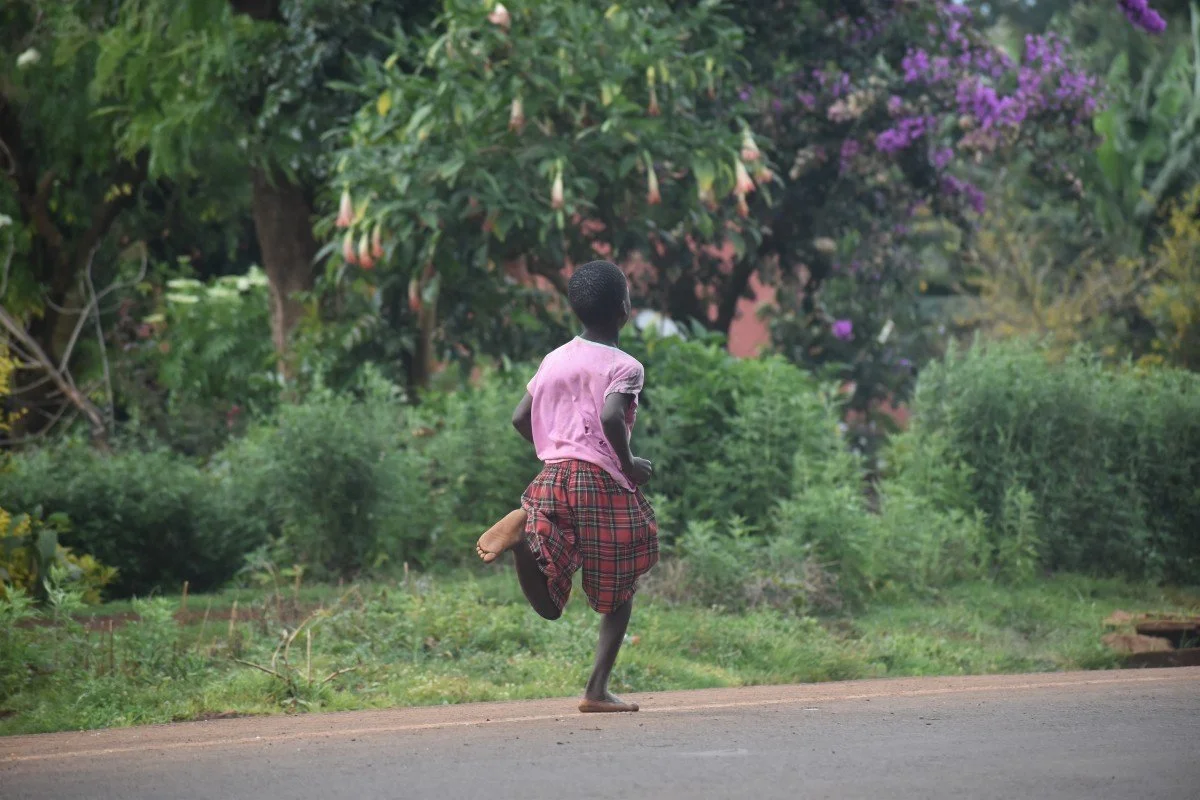
Real champions start on barefoot:) Photo taken during a Community kids run organised by Run Kapchorwa in 2022
The Running Ecosystem Behind the Champions
There is no single secret behind Kapchorwa's remarkable running success.
After living here for almost a decade, I have become convinced that the real story is much bigger.
Altitude definitely helps.
So do the rolling hills and cool temperatures.
Kapchorwa is a place where nature, daily life, role models, opportunities and Community continuously reinforce one another.
An active landscape🚵🏽♀️
Life around Kapchorwa unfolds between approximately 1,900 and 2,700 metres above sea level.
The terrain is rarely flat.
Whether you're walking to school, working in the fields or going for a run, hills are simply part of daily life.
Belgium runner Mauro is soon publishing a documentary about the unique role that nature plays in Kapchorwa’s running success. Enjoy the warm-up (trailer) here:
Local insight 💡
Sometimes our visitors wonder where the Kapchorwa people go for exercise. The honest answer? Most don't. Walking, farming, collecting water, carrying firewood and climbing steep hills are already part of everyday life. Running training comes on top of an already active lifestyle.
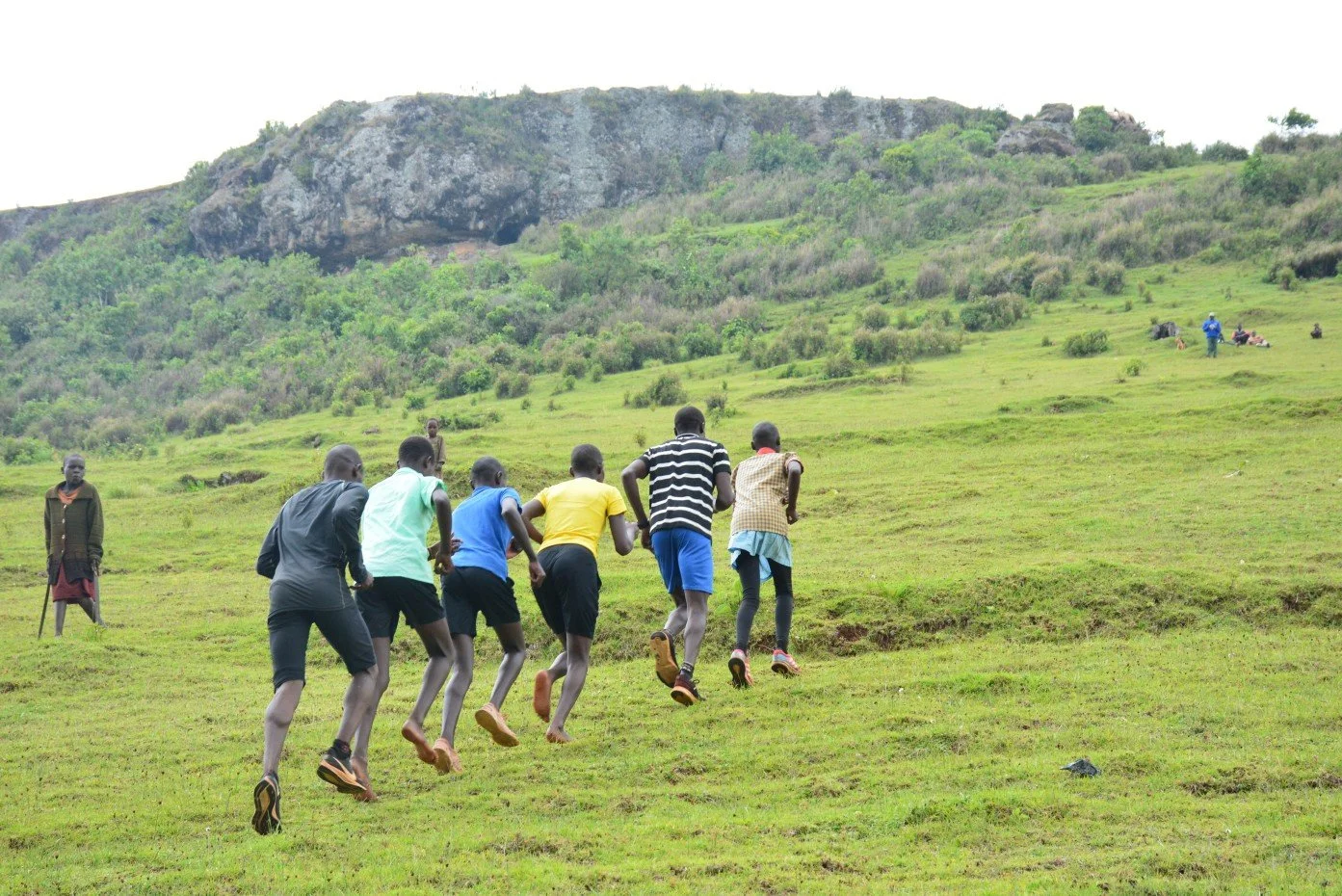
A group of running talents on the steep Kapchelal hill, deep in the hills of Kween District (2600m ASL)
Movement starts young👧🏻
Depending on the location of their village, many children walk 5 to 6 kilometers to school every day.
In the higher parts of neighboring Kween District, journeys of 9 or even 10 kilometers are not unusual.
And movement continues after school.
Children help collect water, work around the home and carry firewood from the forest to the villages from an early age.
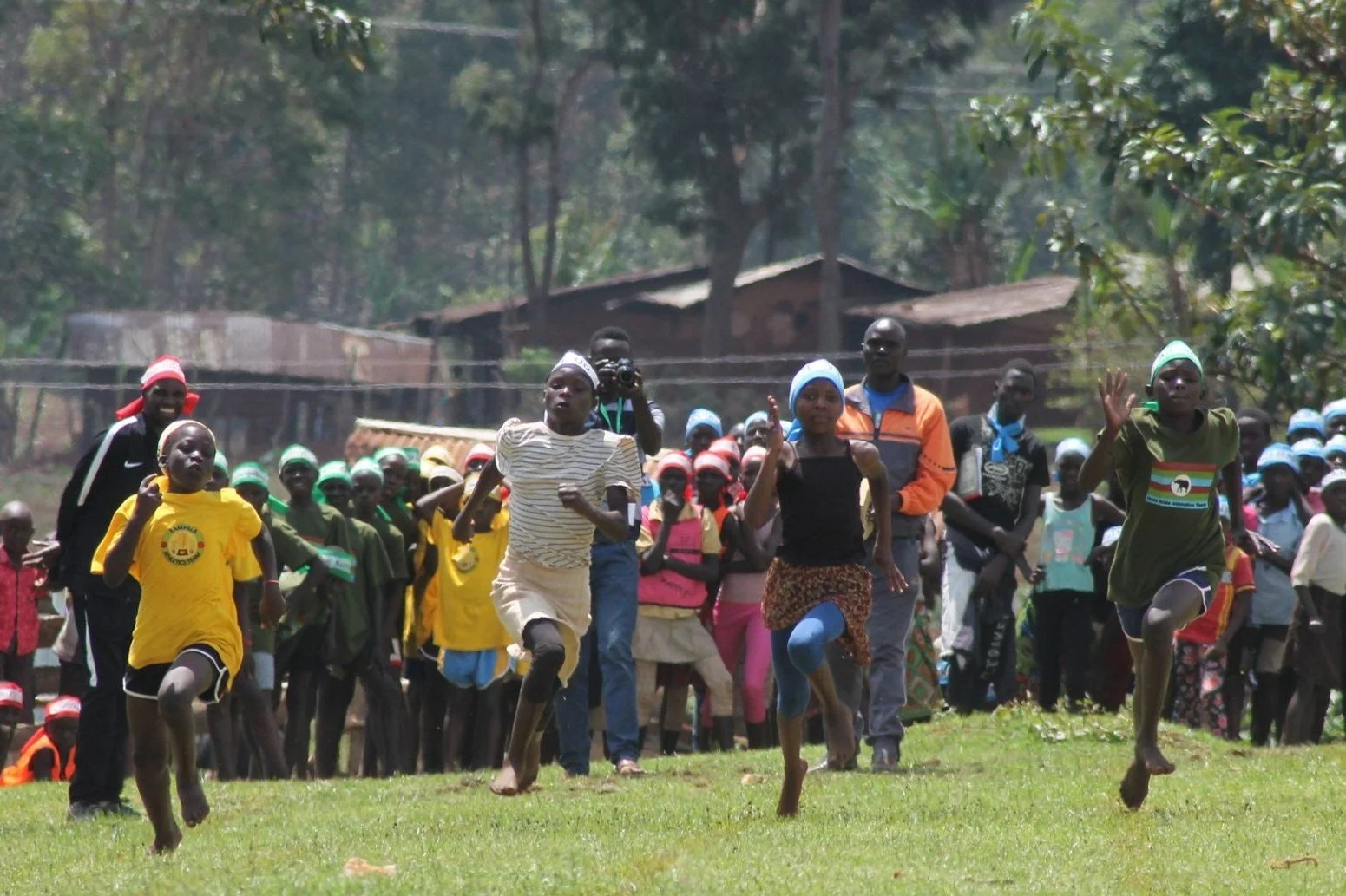
A 100 meter Kids Athletics race during a Home of Talents event in 2019
Local insight 💡
On Saturday mornings, families leave for the Mount Elgon forest as early as 6.00am to collect dead firewood ('kwenek'). By the time breakfast is served around 11.00am, many children have already walked several kilometers, carried a load home and completed other household chores.
Also in their leisure time children are active.
They make toy cars from small pieces of bamboo, roll old bicycle tyres through the village, skip ropes and create games from whatever they can find.
Competitive running usually starts from the age of twelve to thirteen.
But children don't necessarily spend their days loudly declaring that they'll become the next Joshua Cheptegei.
Their dreams are much quieter.
They see the champions running in their village.
They see the houses they’ve built.
And some start training themselves.
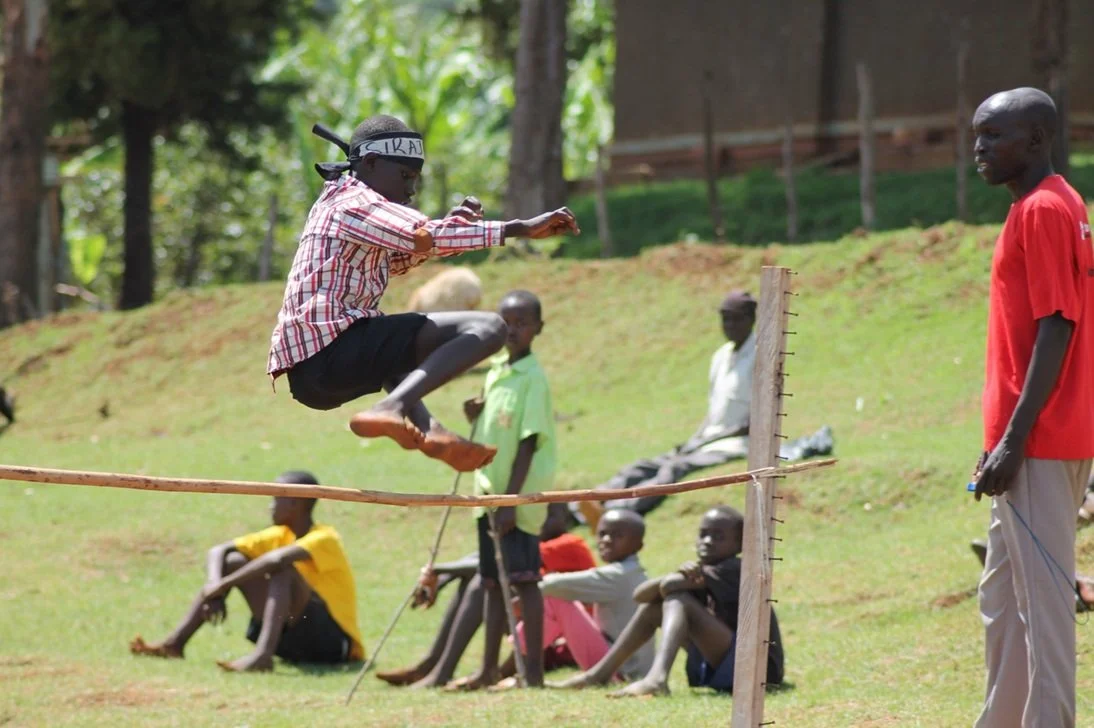
Athletics talent during an event in Kapenguria village near Kapchorwa Town in 2019
“It is the extra-ordinary ecosystem and simple everyday life that have nurtured an exceptional generation of runners. To be precise: one World or Olympic per 13,500 Kapchorwa inhabitants😮”
A pair of running shoes can be a turning point👟
Ten years ago, it was completely normal to see talented children running barefoot.
Running shoes were expensive and difficult to find.
But that has changed.
More sponsors have entered athletics and affordable running shoes can now be found in Kapchorwa Town.
During the early years of our Home of Talents project, we learned something about this.
We initially received a large donation of running shoes. Once the word spread, many new children appeared to receive a pair and we never saw them back again:)
Later, we changed our approach.
Shoes went mainly to young athletes who consistently attended training, sometimes with a small contribution from the athlete or their family.
The tide of opportunities has turned
It's easy to believe that Uganda's running story started with Stephen Kiprotich, Joshua Cheptegei and Jacob Kiplimo.
It definitely didn't.
Talented runners were already emerging decades earlier.
It’s just that they lacked opportunities.
Before the year 2001, there wasn't even a tarmac road between Kapchorwa and Mbale.
Reaching Namboole (stadium in Kampala) for a competition could take several days, especially in the rainy season.
Running shoes were scarce.
International race opportunities were limited.
Former athletes such as Jackson Kusuro, James Chemonges and David Malinga belonged to a generation where talent and perseverance didn't always translate into international opportunities.
Today, a talented 18-year-old is much more likely to find a training group, reach a competition and get noticed by someone with connections to the wider athletics world.
The hills are still the same, but the pathway to success at the world stage has changed.
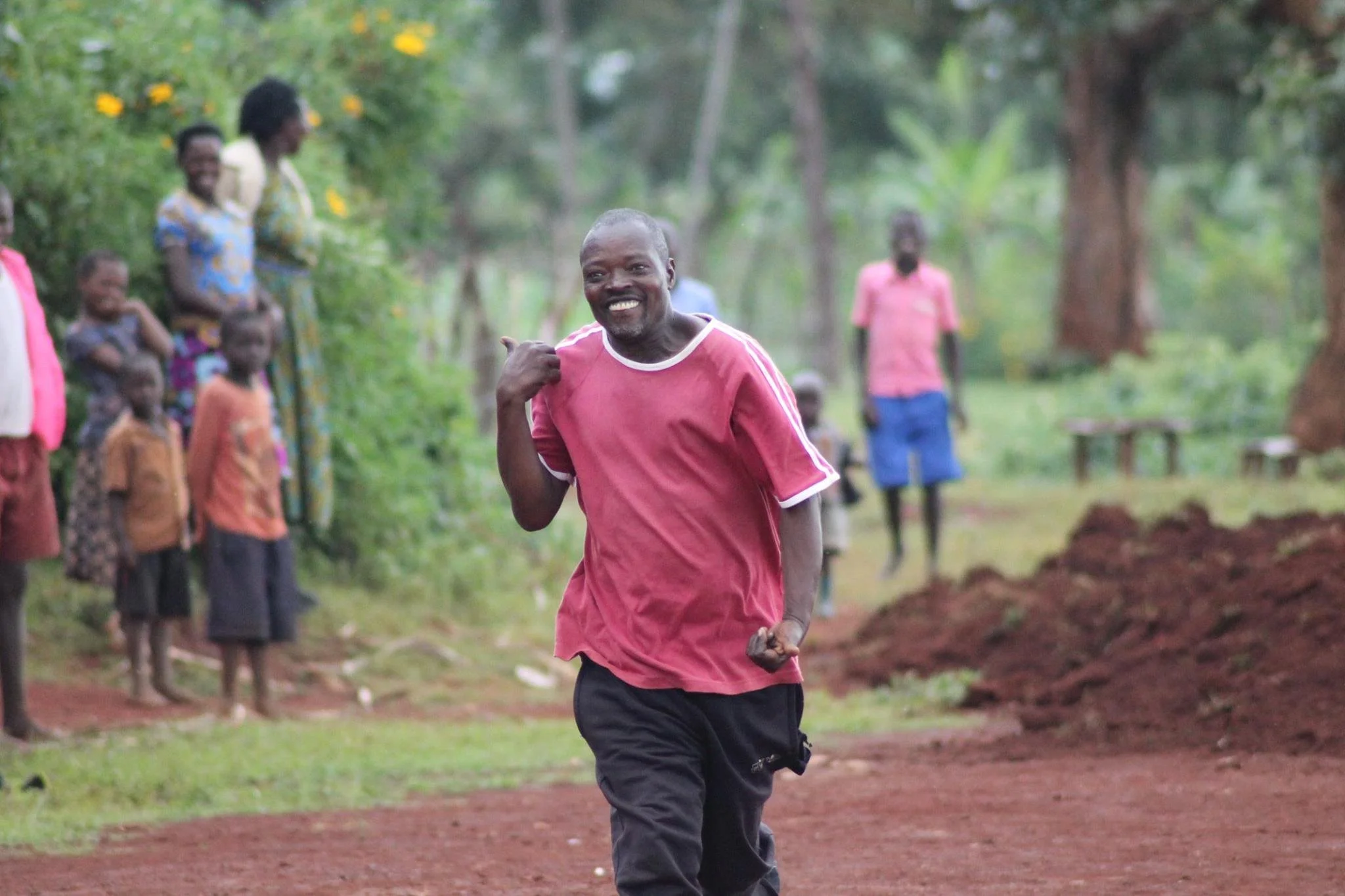
A runner from the village of Kapkoch during a Community sports event
The People Behind the Champions
Running success is never an individual story.
Talent may first be noticed by a games teacher at school.
A Community coach encourages the youngster to join training.
A good performance at a local talent race opens another door (mostly into a local running camp).
More experienced athletes provide a pace to follow.
And eventually, for the very best, a professional manager may provide access to international races.
Some of the people behind Uganda's running success are hardly known outside athletics.
Dutch coach Addy Ruiter has worked with Joshua Cheptegei, Peruth Chemutai and Victor Kiplangat, whilst the Italian coach Iacopo Brasi and Ugandan coach Peter Chelangat support Jacob Kiplimo and team.
Denis Okudach, Joshua Kibet and Fred Cherich help the newest generation of talents to develop.
Schools have also played an important role.
At Sebei College, former headmaster Sam Cheptoris supported talented runners with scholarships. Both Stephen Kiprotich and Joshua Cheptegei studied here.
And sometimes former athletes become the coaches of the next generation.
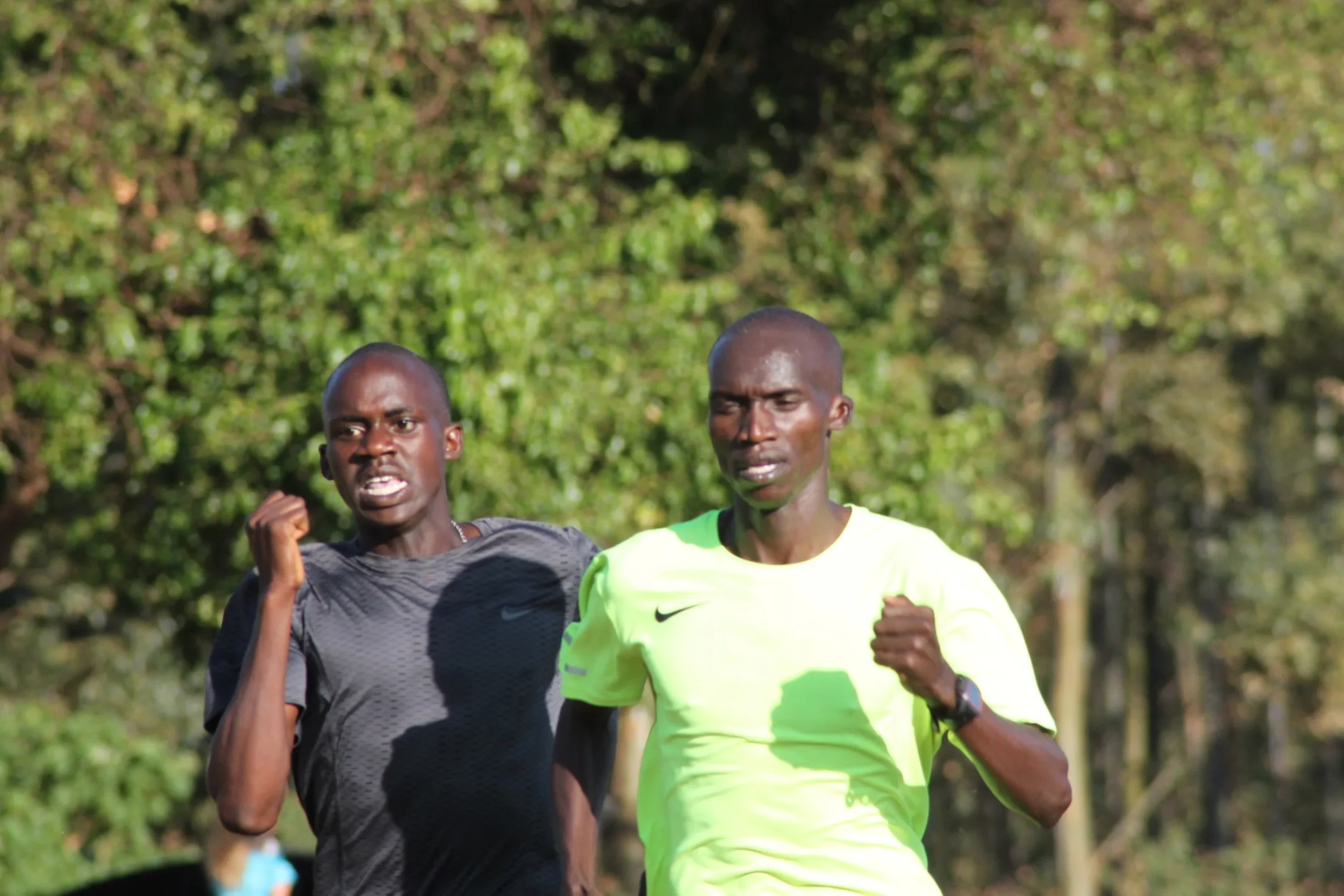
Jacob Kiplimo and Joshua Cheptegei during a training at Sebei College (Kapchorwa District) in 2017
“Life comes with ups and downs, just like our hills - you just have to keep going.”
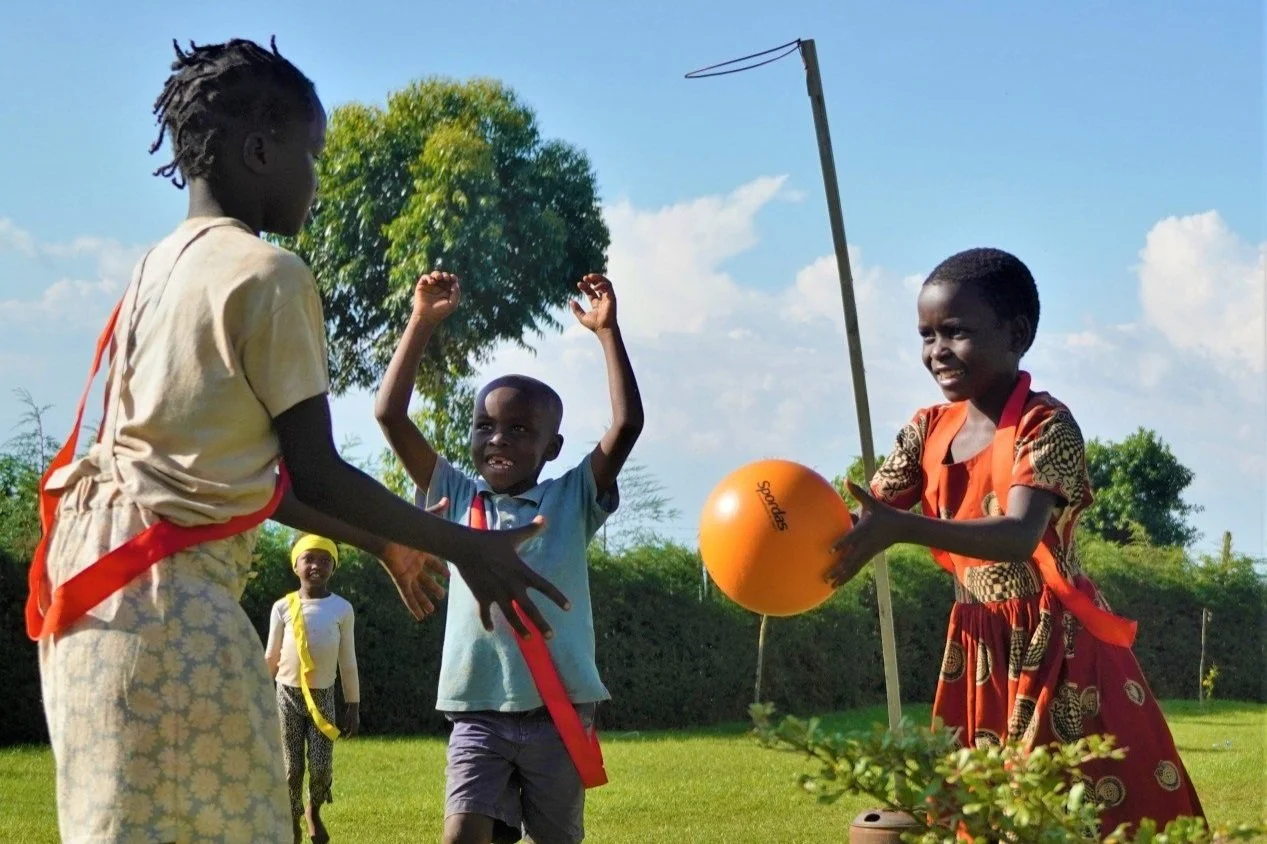
Children from the Kapchorwa Community enjoying a game of netball @ Home of Friends Guesthouse
From Home of Talents to international competition
From 2016 to 2021 I was involved in the Home of Talents project, which we ran together with secondary school teacher and coach Fred Cherich.
Our Community coaches Jackson Kusuro and David Cherop spent years training young runners around Kapenguria.
When parental support was missing, they visited families, arranged transport or took a young athlete under their wing.
Especially young girls, who are vulnerable to early marriages, were in need of guidance and support.
Now, some of our young talents are competing internationally.
Rebecca Chelangat, Samuel Simba Cherop and Nancy Chepkwuru recently achieved major results at African and international level.

Joshua Cheptegei enjoying a vegetable rice with cocktail juice in the Home of Friends garden
Food that fuels an active lifestyle 🍽️
One of the common questions we receive is:
"What do the champions eat?"
Some visitors seem to expect a secret recipe.
But in actual sense the food is surprisingly simple.
A typical meal for many local athletes includes posho, rice and local greens.
Joshua Cheptegei, for example, enjoys rice or vegetable rice alongside posho and indigenous vegetables after training.
Kapchorwa’s athletes have a strong preference for fresh and home-cooked meals.
Fable or fact? 😮
Several people say that Joshua Cheptegei - after training for a year in Iten, Kenya, in 2015 - returned home because he didn’t like ugali, the Kenyan version of posho. While I am not 100% sure if this is true, I am certain about Joshua’s connection to his home soil and Community, as well as his motivation to build his own team. History and his results have proven this!
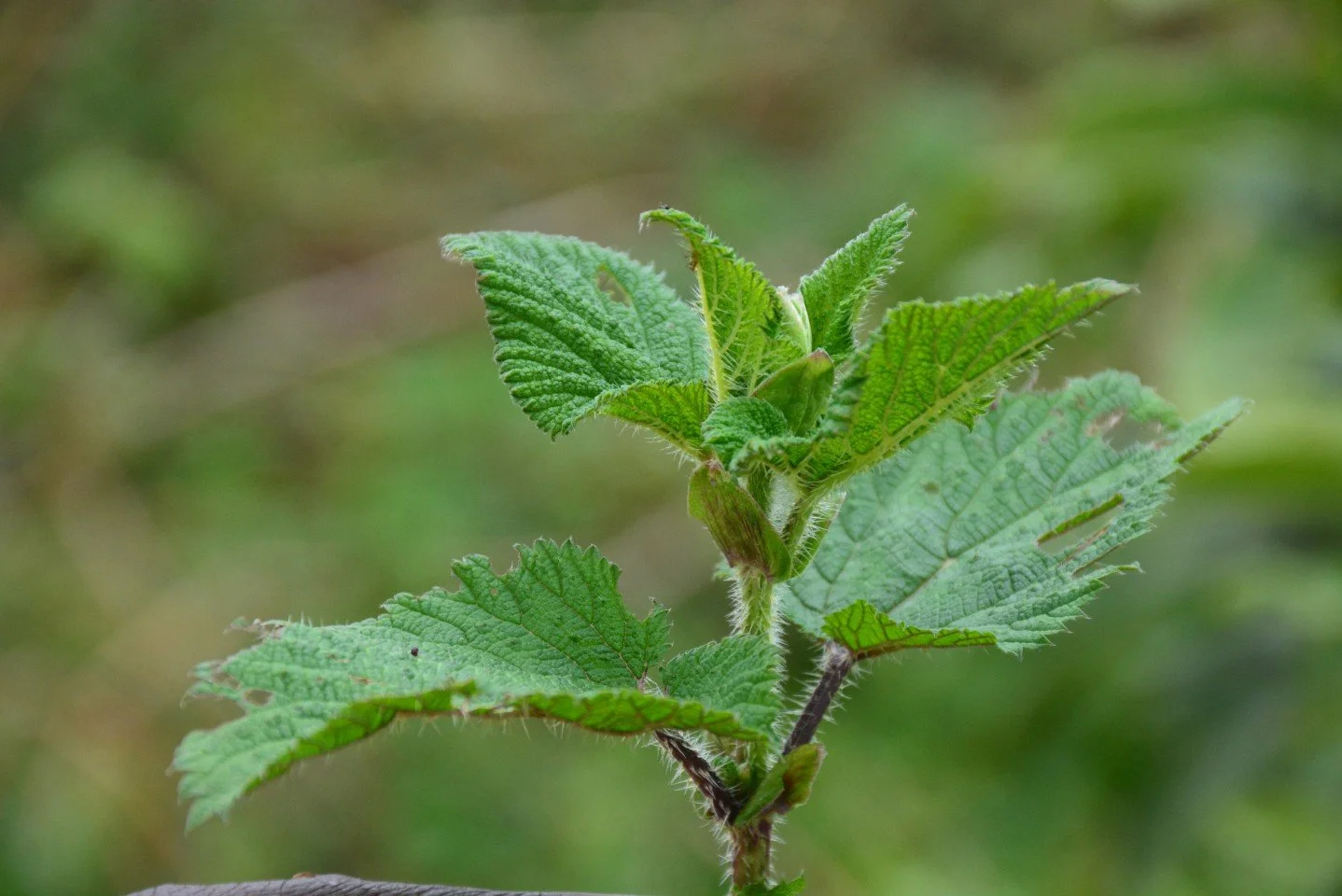
The sseewyondet plant, growing in the higher belts of Kween District. An indigenous spinach believed to create a long life!
Local insight 💡
Many Ugandan athletes eat their own traditional food wherever they compete. During international races, its common for athletes to bring posho or matoke, or travel with someone from Uganda who prepares familiar meals. Peruth Chemutai once fell ill after eating too much Western food during the World Championships in Eugene, Oregon (2022).
Beyond the athletes' plates, Kapchorwa serves several foods most visitors have never encountered.
Try kaleta, a combination of Irish potatoes and matoke, a delicacy in the Mosopisiek Trail homestay.
Taste kwerionek, traditional fermented milk.
Or discover indigenous greens such as soyet, sakyandet and sseewyondet (see the photo above).
The spinach that could make you 100?
In the Mosopisiek Highlands, sseewyondet comes with an intriguing belief.
Elders associate eating the indigenous vegetable with living a long and healthy life.
Before cooking, the leaves are thoroughly crushed using a traditional tool with four sharp hooks.
The native people take this preparation seriously.
Whether or not you believe the longevity stories, the tradition tells you something important:
Food in Kapchorwa connects health, culture and nature.
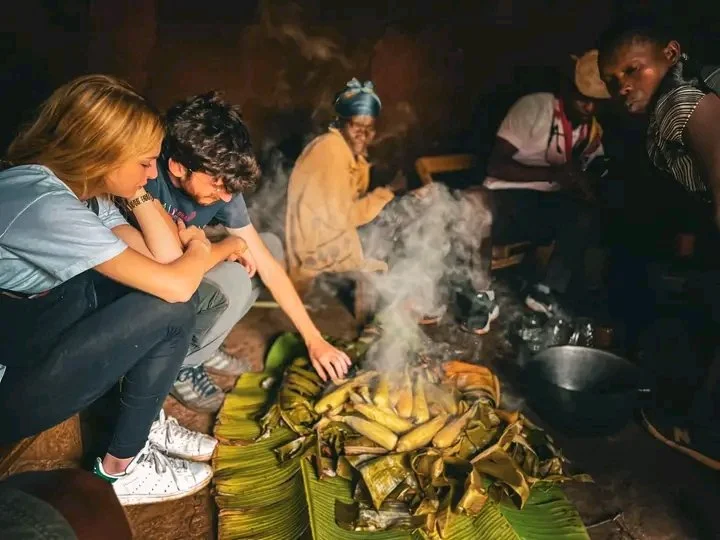
A Cooking with the Kapchorwa Mamas nutritious food experience in Siron village near Kapchorwa Town
FOUR iconic running areas around Kapchorwa
In Kapchorwa, the entire landscape is a training ground.
But if you're visiting for the first time, four areas give you a particularly good introduction.
Champion's Trail🏡
If there's one route every visitor should experience, it's the Champion's Trail.
This rolling 5-kilometer route starts next to Home of Friends Guesthouse and is especially popular during the late afternoon and early evening.
Victor Kiplangat built his home along this road in 2024, while Peruth Chemutai lives next door and Joshua Cheptegei's residence overlooks the next hill.
The trail is a wonderful introduction into everyday Kapchorwa.
Children returning from school.
Farmers moving their cattle.
Elite runners passing by.
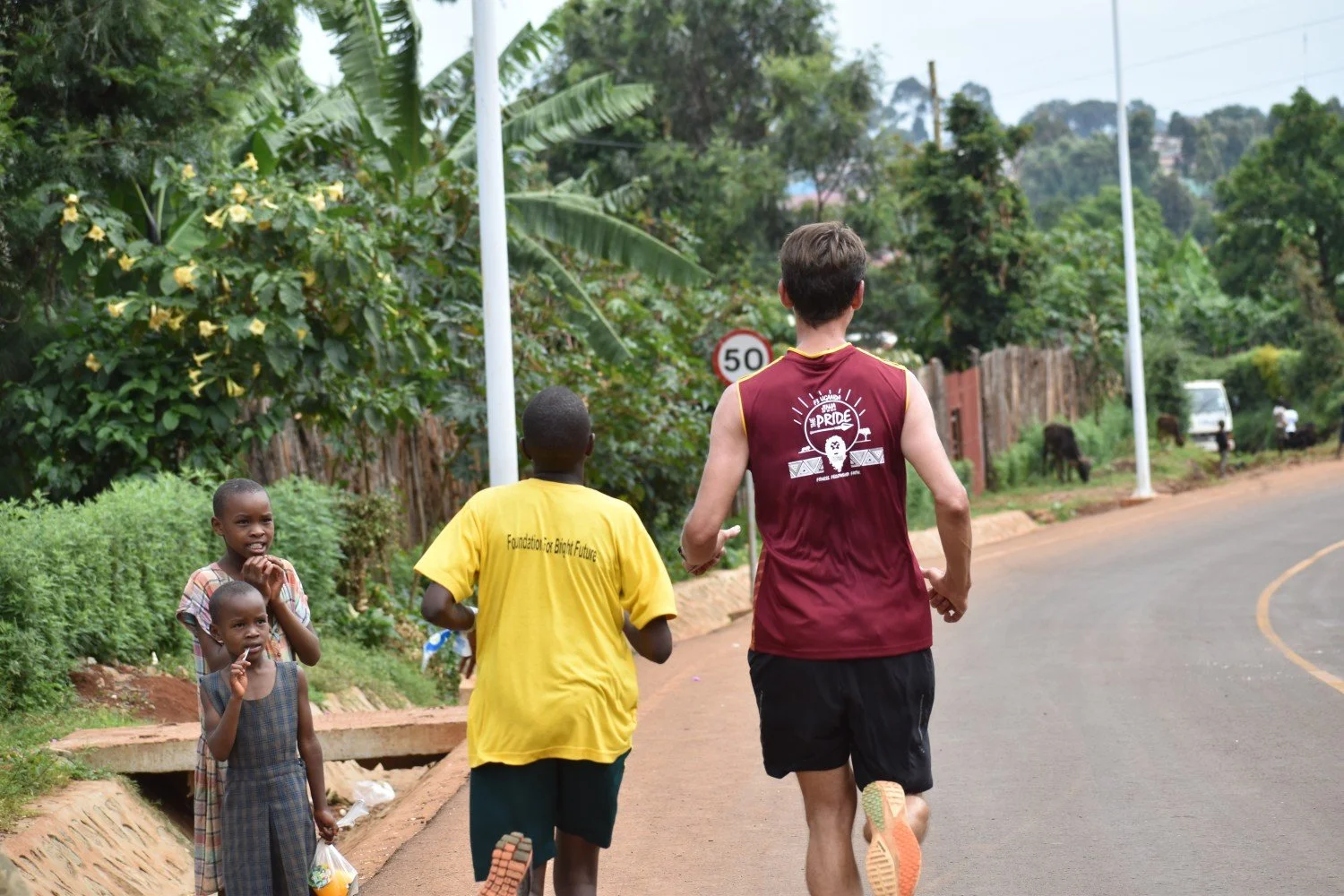
And occasionally a group of children may decide to join you for a few hundred meters.

Runners from Jinja climbing Kapchol hill as part of the Champion's Trail, close to the residences of Victor Kiplangat, Peruth Chemutai and Joshua Cheptegei
Teryet🏃🏽
Teryet has become one of Uganda's best-known training locations.
Within a few hundred meters you'll find the Kiprotich National High Altitude Training Center, Joshua Cheptegei's training camp and small local bars serving lakwek, Sebei's traditional honey wine.
Getting there is already a serious workout!
From Kapchorwa Town, the road climbs approximately 600 elevation meters over 10 to 11 kilometers.
Joshua Cheptegei also regularly explores the forest trails beyond Teryet, where narrow single tracks climb towards 3,000 meters above sea level.
Fun fact 😮
During the classic World Mountain Race Championships qualifier, Jacob Kiplimo once covered the Teryet climb in just over 41 minutes. There is only one mountain biker who ever recorded a faster time on the same Strava stretch.
My own best effort? About 1 hour and 14 minutes. There is still work to do😅
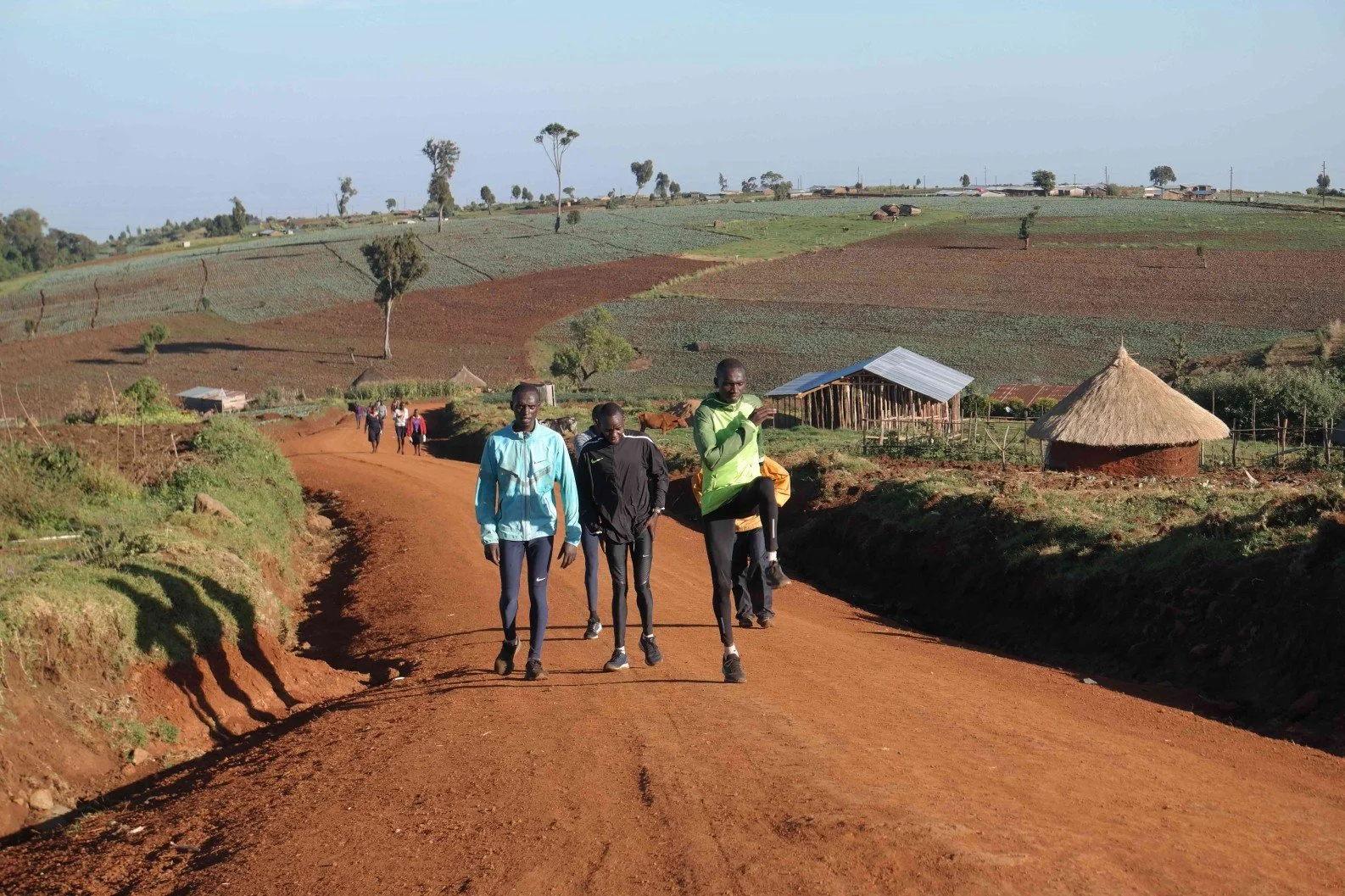
Joshua Cheptegei (lifting the knee) during a training session in the village of Teryet in October 2016
Kamuges & Mengia 🌾
Want to experience the roads local marathon runners know by heart?
Head towards Kamuges and Mengia.
The 21-kilometer Kamuges Loop passes the homes of Stephen Kiprotich and Felix Chemonges.
For longer endurance runs, athletes continue into neighbouring Kween District.
The Mengia Loop climbs through quiet farming villages between approximately 2,000 and 2,500 metres.
Apart from farmers, schoolchildren, cows and the occasional donkey, traffic is remarkably limited.
This is also where a guide becomes valuable.
The network of village tracks is extensive, weather can change quickly and knowing which turn leads home makes a 30-kilometer morning considerably more enjoyable.
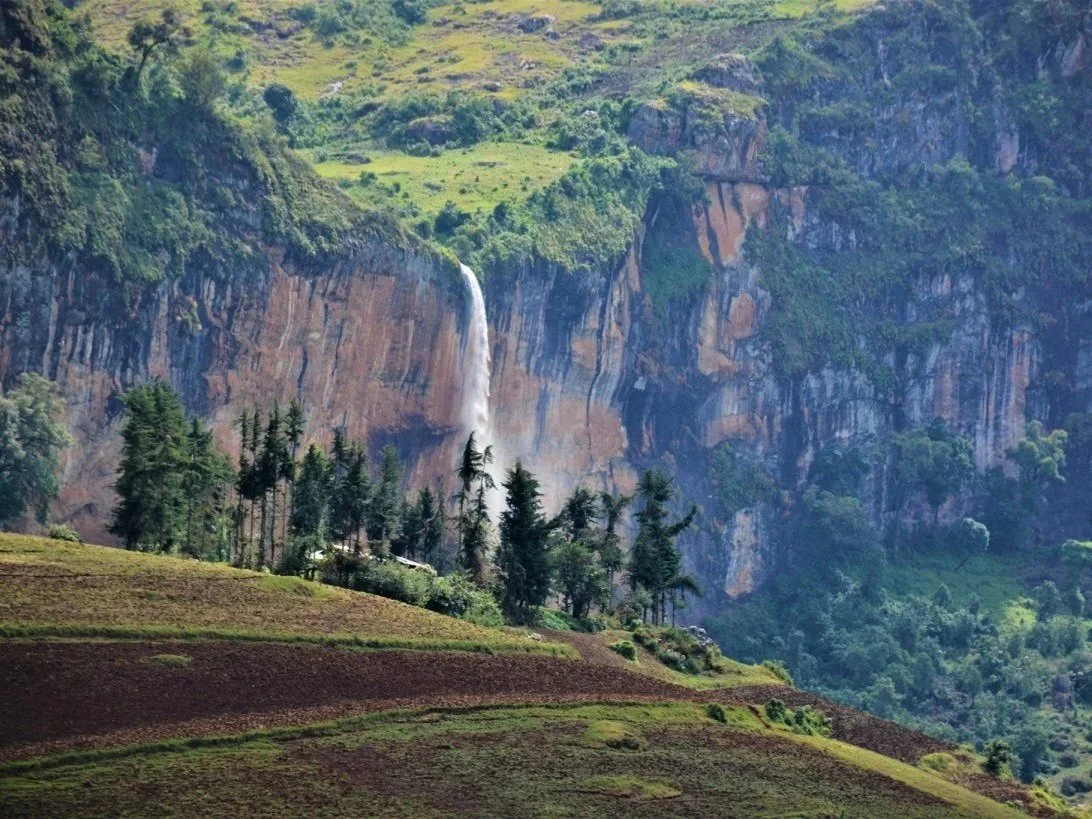
The spectacular Mengia waterfall in the remote highlands of Kween District. Photo credit: Juma Chebet
Mosopisiek highlands🌿
If you're looking for the most spectacular running landscape around Kapchorwa, this is the place to be.
Long stretches of undulating red-dirt trails connect farming villages, waterfalls, caves and traditional homesteads.
There is hardly any traffic.
The views are huge.
And the landscape is deeply connected to Mount Elgon.
But the Mosopisiek highlands are interesting for another reason.
All of the region's leading athletes have family roots within this remarkably small Community.
The stories of Cheptegei, Kiprotich and Chemutai connect running with something much bigger: family, food, an active childhood, nature and Community.
This is what makes the Mosopisiek Trail so special.
Most visitors come back with comments like:
"It feels like the real Africa."
And:
"I didn't know places like this still existed."
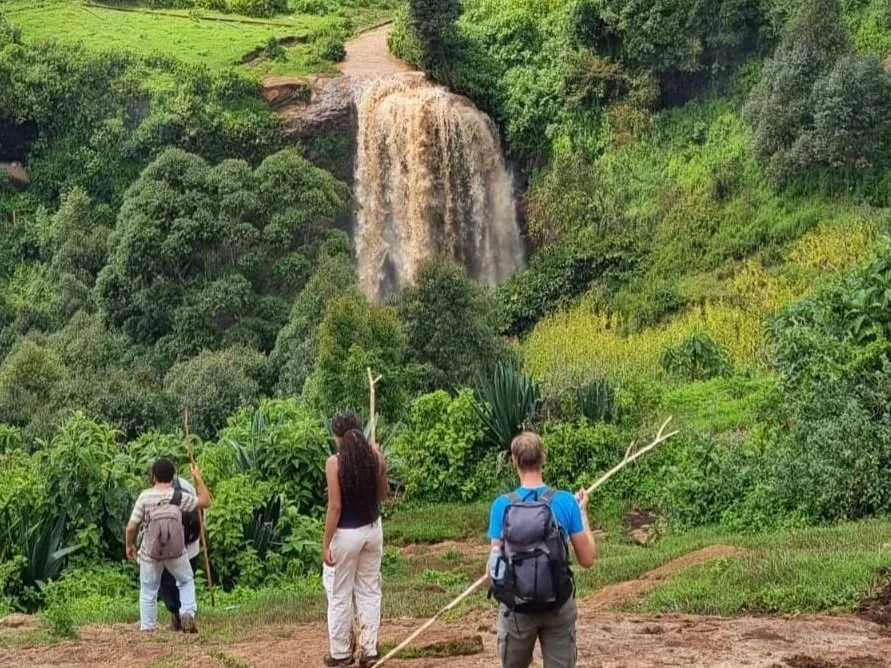
The remote Kere waterfall along the Mosopisiek Trail in Kween District
You don't have to be an elite runner 📍
Kapchorwa can be experienced at almost any pace. Walk the Champion's Trail, join a relaxed sunrise run, explore the Mosopisiek Highlands or build a serious altitude-training programme. We can adapt the experience to your level, interests and available time.
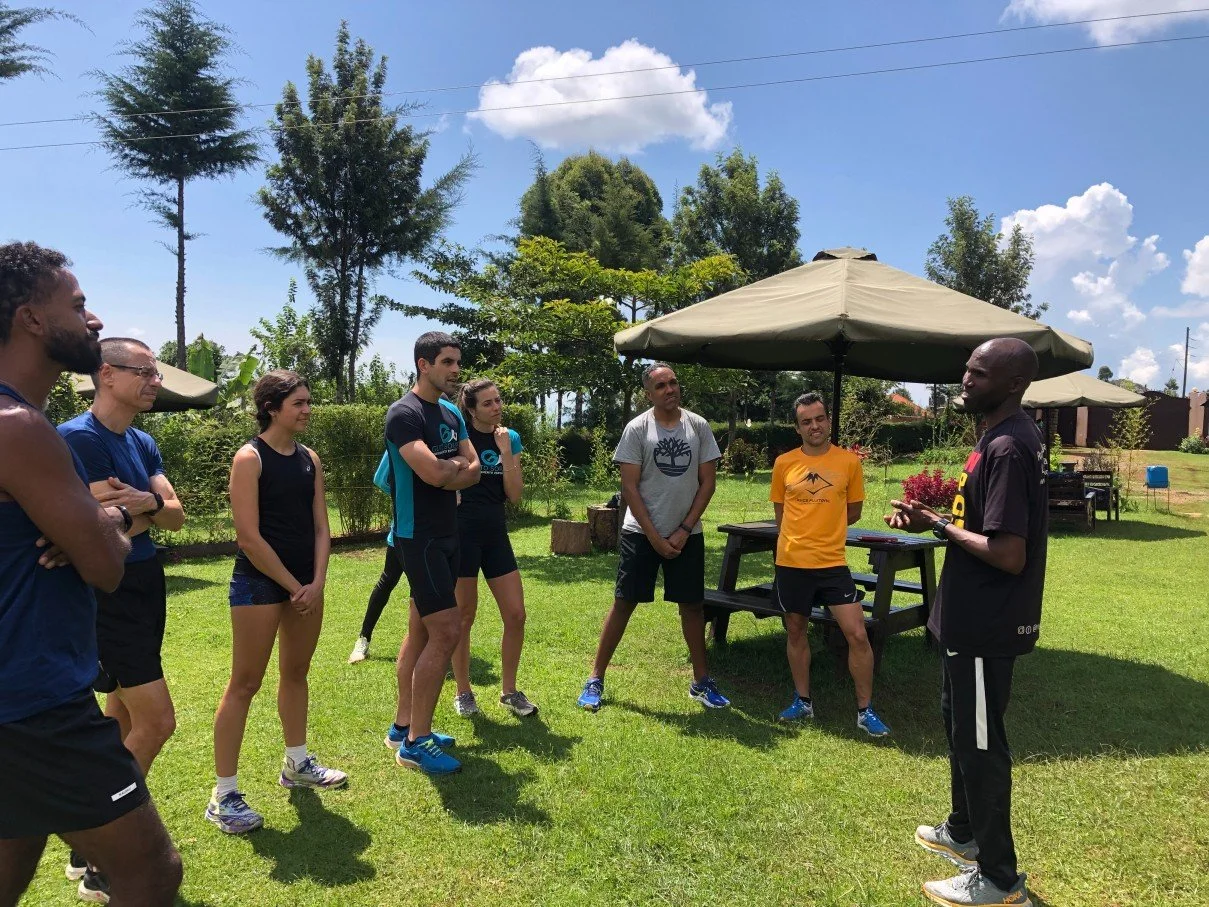
A group of Brasilian runners being briefed by our running guide David Cherop (older brother to Stephen Kiprotich)
Running Experiences in Kapchorwa
You can experience Uganda's Running Capital for just one morning or build an entire holiday around it.
Champion's Trail experience
A guided 5 km walk/run through the neighbourhood where several international champions live and train.
Along the way, you discover the homes, families and everyday stories behind the medals.
Ideal for: Recreational runners, active travellers and mixed groups.
→ Explore the Champion's Trail
Guided sunrise run
Experience Kapchorwa as the town wakes up.
Footsteps.
Birds.
Children heading to school.
Farmers beginning their day.
And, if you're lucky, one or two very fast people passing you.
Ideal for: All running levels.
Trail running & Mosopisiek adventures
For runners who want to move beyond Kapchorwa Town.
Explore the highlands, Community trails, waterfalls and remote villages of Kween and the Mosopisiek area.
Ideal for: Trail runners and adventurous travellers.
Running holidays & altitude training
For a deeper experience, we organise personalised running holidays together with Run Kapchorwa.
Combine guided training with accommodation, local food, recovery, cultural encounters and enough time to learn about Kapchorwa beyond the running trails.
Ideal for: Individual runners, friends and running clubs.
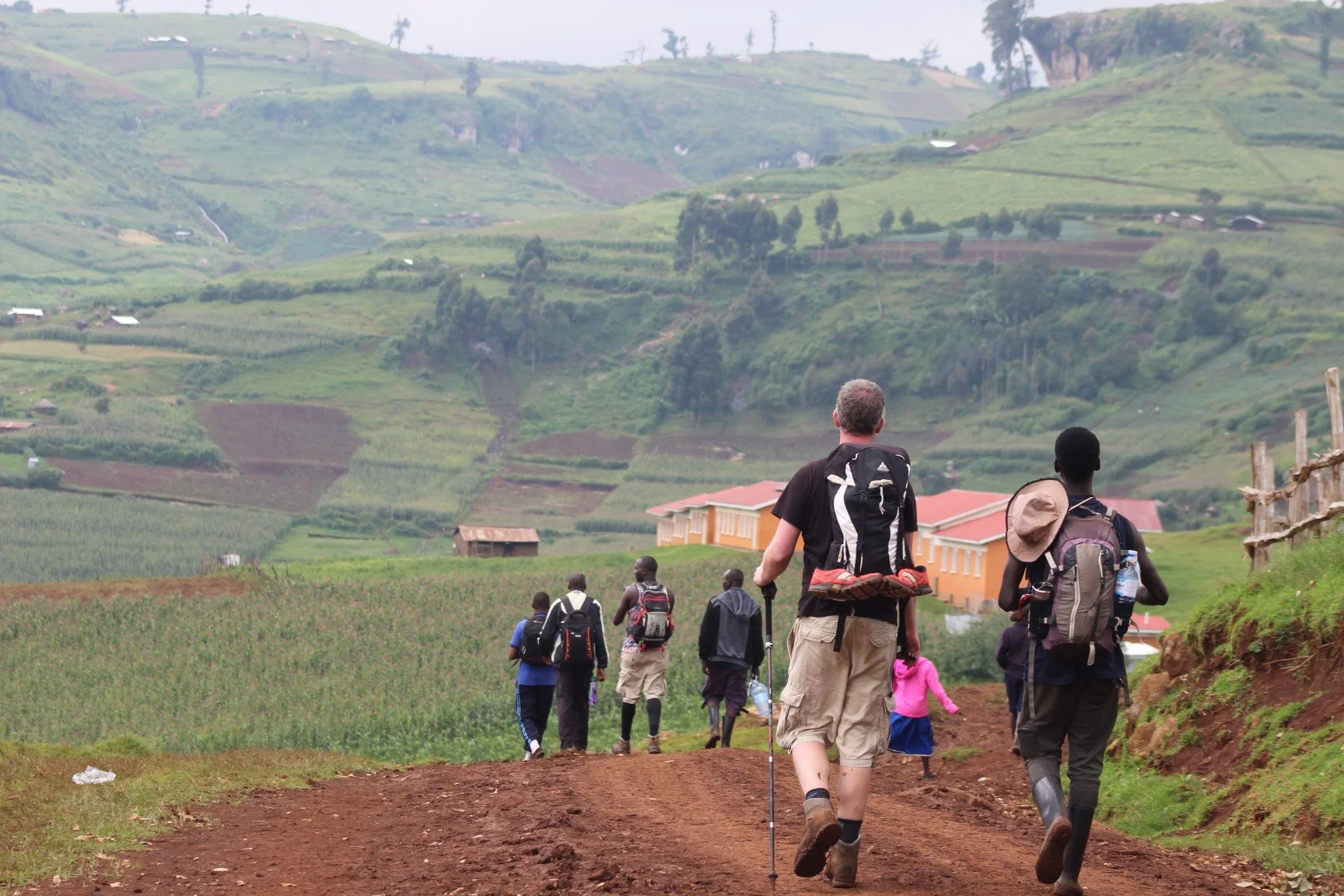
Running Like a Local: A Few Things to Know
Running in Kapchorwa is informal and friendly.
A simple wave is often enough when passing another runner.
Want to break the ice?
Try a few words of Kupsapiiny. Even a simple "A chamunéé?" - "How's your life?" - usually brings a smile.
You may also naturally find yourself running alongside native athletes.
Most training groups are relatively open, and joining for (part of) a run can sometimes be arranged spontaneously.
The groups around Joshua Cheptegei and Jacob Kiplimo tend to be more private.
So be open and friendly yet modest at the same time.
Don't try this yourself😅
During a promotional shoot in Teryet, I once tried to keep up with Joshua Cheptegei and his training group.
I lasted about 100 meters.
Fortunately, the cameraman captured those 100 meters and not what happened afterwards!
Here is that particular video (see second 20-26):
A few unwritten rules
Greet people before pulling out your camera, preferably with a few words Kupsapiiny (our staff and guides are happy to coach you😉).
Ask permission before photographing athletes during training.
Respect athletes who are clearly focused on their session.
Don't give children money or sweets along the trails.
Avoid very short running shorts in more conservative rural Communities (e.g. Kween and Kapchorwa’s highlands).
Respect people's crops when trails cross farmland.
And if cows block the trail? Slow down, give them some space and continue.
When children or (sometimes) adults join you on village trails:
Smile.
Let them run along for a few hundred meters.
Then encourage them to return home.
It's all part of the experience.
Tuesday morning at Boma Grounds
If you want to see Kapchorwa's running ecosystem come together, visit Boma Grounds around 6.30am on Tuesday.
Several training groups gather for their weekly speed session.
Watch respectfully, connect before taking photographs and, ideally, visit with a native guide who knows the athletes and their coaches.
Practical Tips for Running in Kapchorwa
Running at altitude feels different.
And the steep hills can make it feel even more different.
A few lessons we've learned from visiting runners:
Give yourself a day or two to adjust.
Start slower than you think you need to.
Stay well hydrated.
Bring a light layer for cool mornings.
Use shoes suitable for both tarmac and dirt.
Don't run remote trails before or after daylight.
Expect weather to change quickly in the highlands.
Use a guide for the Mengia long run, Teryet forest trails and more remote Mosopisiek routes.
The Champion's Trail, Kamuges Loop and Waterfall Loop are easier to explore independently once you know the basic route.
Local insight 💡
Most visitors expect altitude to be their biggest challenge. But more often, it's the endless rolling hills.
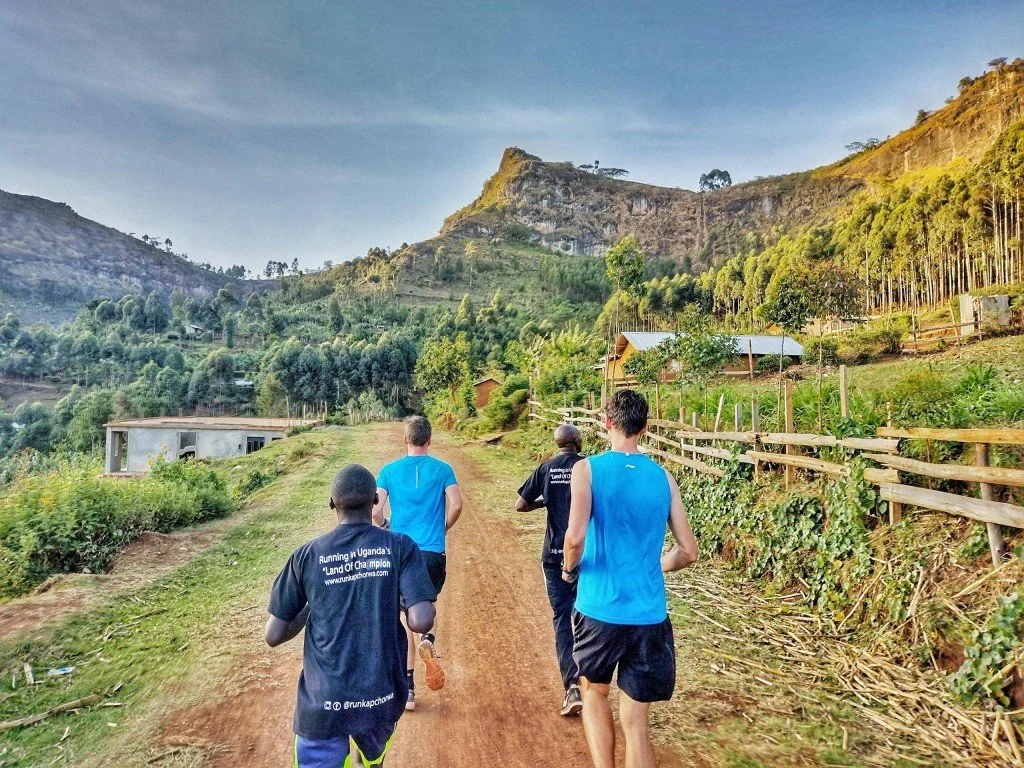
Runners along the Waterfall Loop trail, at 15 minutes from Kapchorwa Town and our Guesthouse
Best time to run
Kapchorwa can be enjoyed throughout the year.
December to March generally brings drier roads and trails, making these months particularly good for longer runs and training camps.
During the rainier months, roughly April to June and September to November, the landscape becomes greener and the waterfalls more spectacular.
Trails can become muddy.
Very muddy.
I remember joining our young Home of Talents runners during rainy-season training and repeatedly getting stuck in the black soil.
The children?
They simply kept going.
Whichever season you choose, head out early.
The temperatures are cooler, the light is beautiful and the running Community is already on the move.
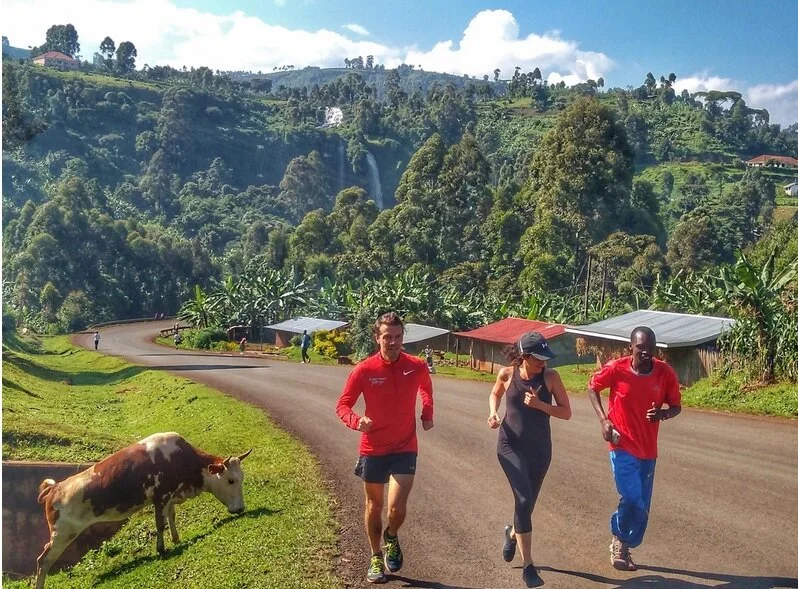
A running experience with the second Sipi waterfalls on the backdrop
A few running & Community principles
Kapchorwa's trails are not a running park. They are people's roads, farms and neighbourhoods.
When you run through a village, slow down when you meet people. Greet first. If you want a photograph, ask. This is particularly important around homes and families.
Don't photograph elite athletes while they're training. They are working, and there can also be sponsor and image-rights considerations. If you meet them afterwards, a greeting or conversation is usually much more welcome.
Children may spontaneously join you for a few hundred meters. Smile, greet them and enjoy the moment. But don't give them money or sweets. If they ask for pesa or karik (two words for money), simply explain that you don't give these out.
Most village trails are public, although occasionally you cross someone's land. That's fine as long as you stay on the path and don't step on crops.
And perhaps the most important rule: don't arrive trying to make friends, partnerships or business connections at full speed. Kapchorwa is a place where relationships take time. Run together. Drink African tea afterwards. Listen. The rest can follow.
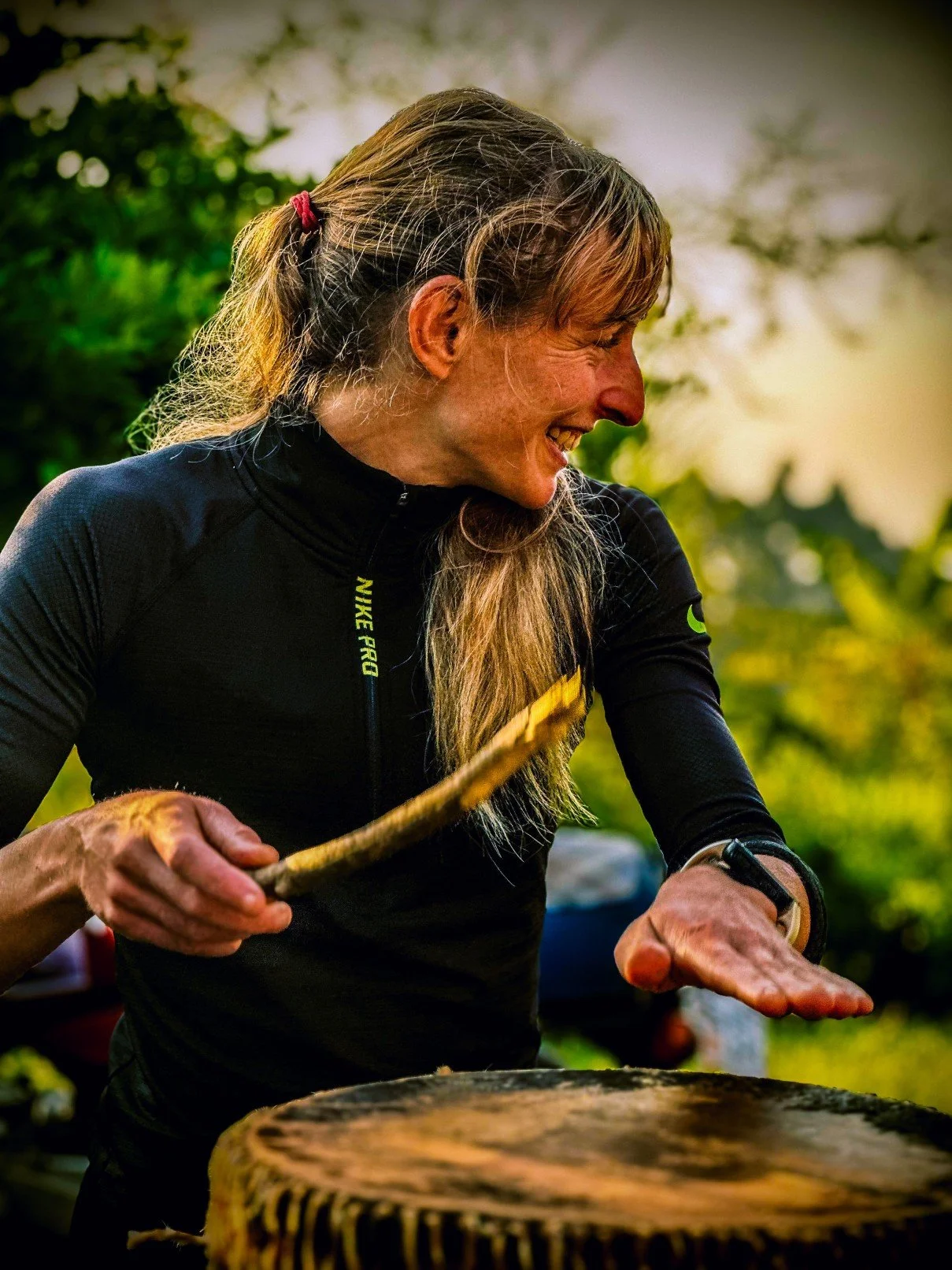
A runner from Ireland drumming during a Cooking with the Kapchorwa Mamas experience
More Than Running
On my second day in Kapchorwa, I walked about 12 kilometers towards Teryet, where Uganda's National High Altitude Training Centre stands today.
It rained for much of the way.
Instead of ruining the day, the rain introduced me to Kapchorwa.
Along the road, complete strangers invited us inside for tea and chapati.
Years later, some of my favourite moments still have surprisingly little to do with running times.
Farmers ploughing their fields with oxen in the early morning light.
Songs drifting across the hills as people work.
Stephen Kiprotich proudly showing me his Irish potato farm.
After almost a decade here, I have come to realize how everything connects.
Landscape.
Daily movement.
Food.
Families.
Coaches.
Opportunity.
Community.
And years and years of consistent training.
That's the story behind Uganda's Land of Champions.
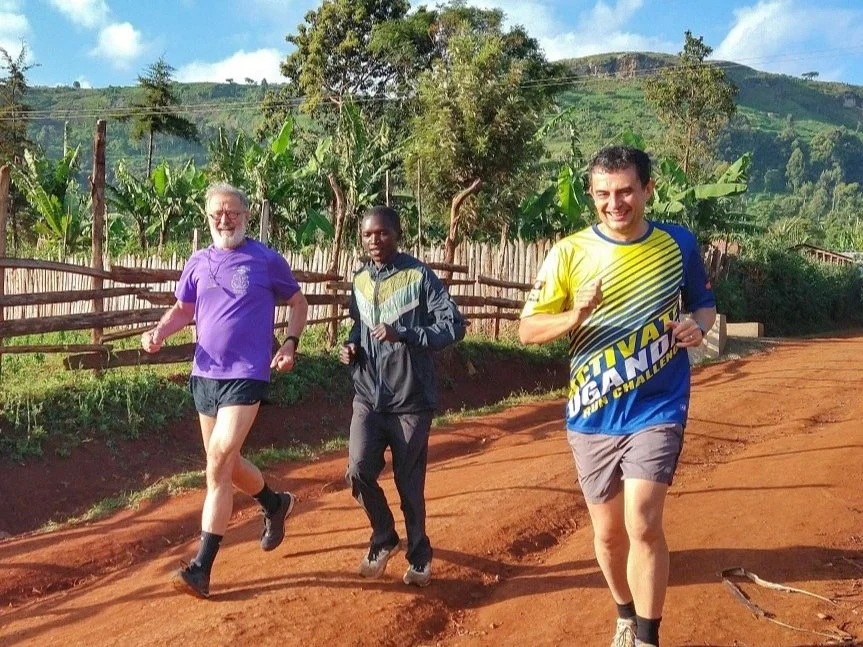
Belgium visitors enjoying a guided run with one of our native guide-athletes
Start Planning Your Running Experience
You don't have to come to Kapchorwa to chase a personal best.
Come to run alongside upcoming and elite athletes.
Come to explore the trails where they train.
Come to meet the people, families and communities behind the medals.
Or simply come to experience the Land of Champions at your own pace.
Whether you have a few hours or several days, we can help you put together an experience around your interests, fitness level and available time.
Tell us:
Your travel dates
Your running experience
Who you're travelling with
What you'd like to experience beyond running
How much time you have
From a relaxed morning on the Champion's Trail to a multi-day running and cultural adventure through the Mosopisiek Highlands, we'll help you find your own way into Uganda's Running Capital.
Our team is looking forward to welcoming you to this incredible place!
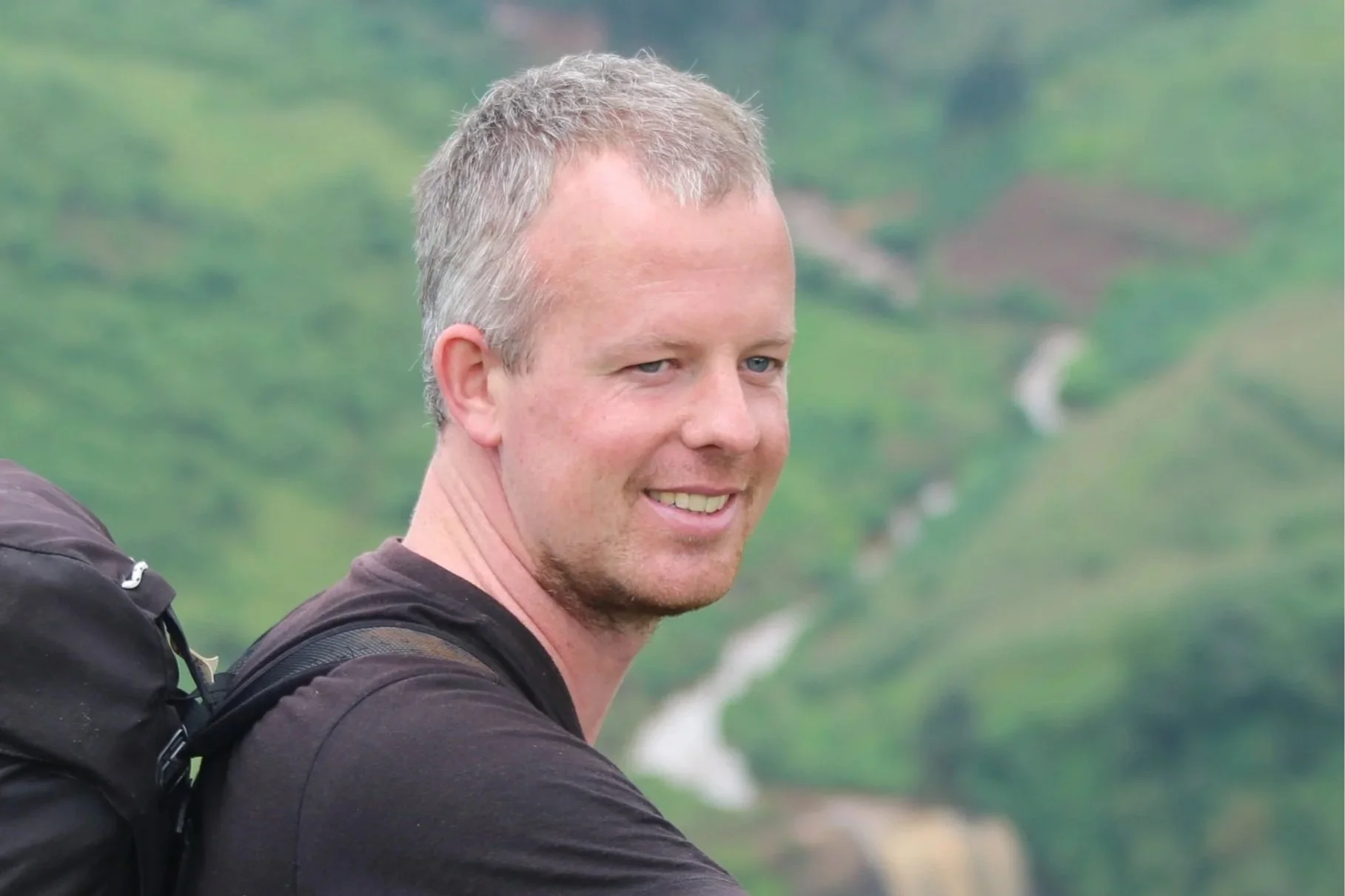
This blog is written by Daan Oxener, a Dutch social entrepreneur who is based in Kapchorwa since 2016. Daan manages Home of Friends Guesthouse, together with his wife Eliza. He is passionate about exploring Mount Elgon’s stunning nature and authentic culture. Through Run Kapchorwa he empowers youth with skilling & employment opportunities.